
AR vs VR: 7 Powerful & Exciting Differences, Uses & MR Explained
Introduction
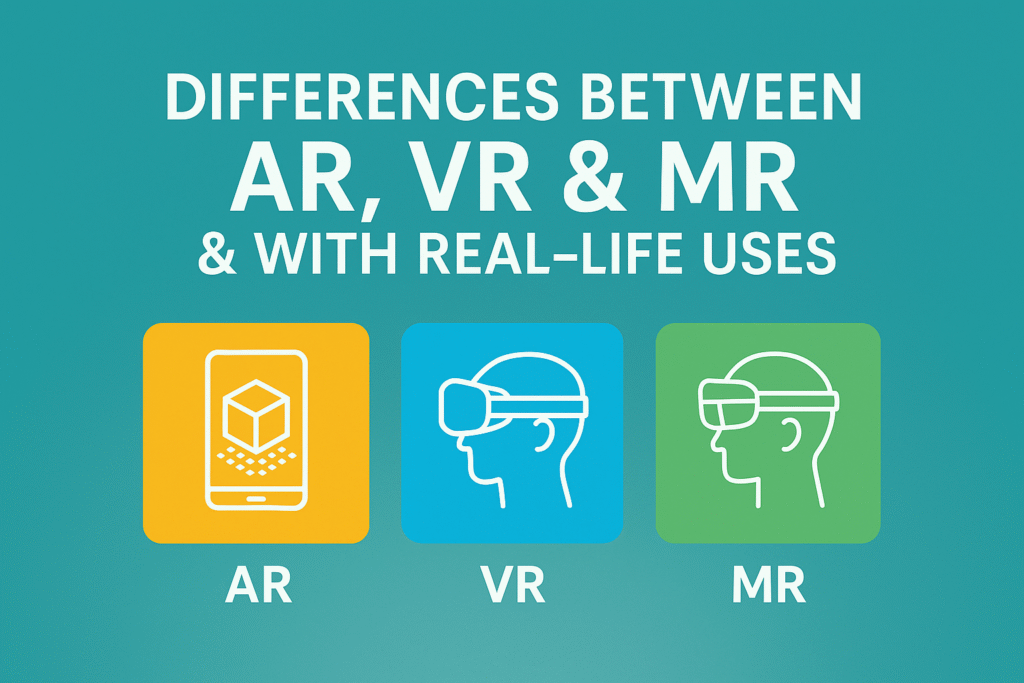
AR vs VR vs MR are three immersive technologies that are reshaping how we interact with both digital and physical worlds. Each technology offers a distinct experience — from fully immersive virtual environments to enhancing real-world surroundings with digital elements.
In this blog, we’ll break down the key differences between AR vs VR vs MR and explore their real-life applications. Whether you’re a tech enthusiast, developer, or business professional, understanding these technologies will give you valuable insights into the future of innovation.
According to IBM’s overview of AR, VR, and MR, immersive technologies are transforming industries worldwide.
AR vs VR vs MR: What is Augmented Reality (AR)?
Defining Augmented Reality
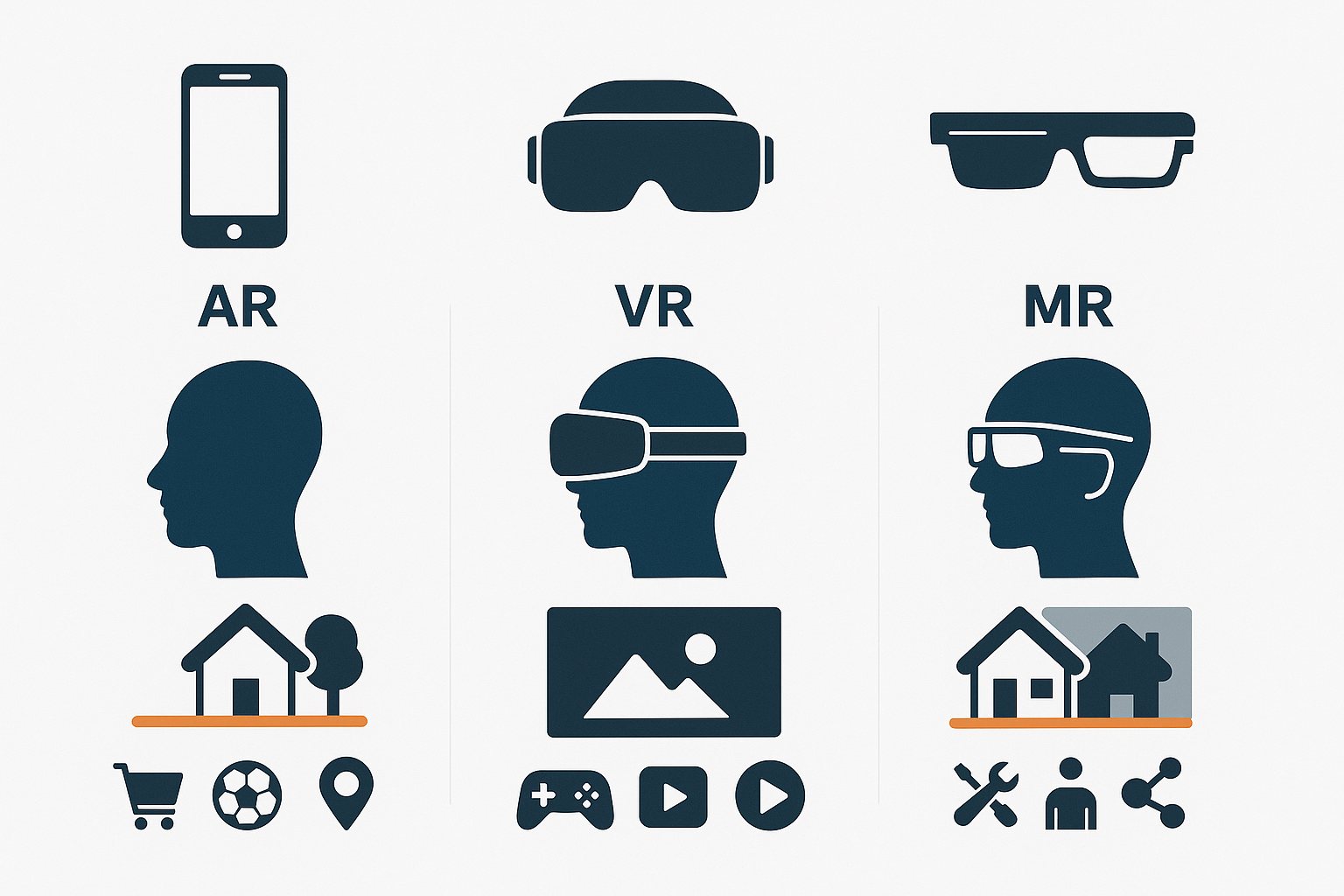
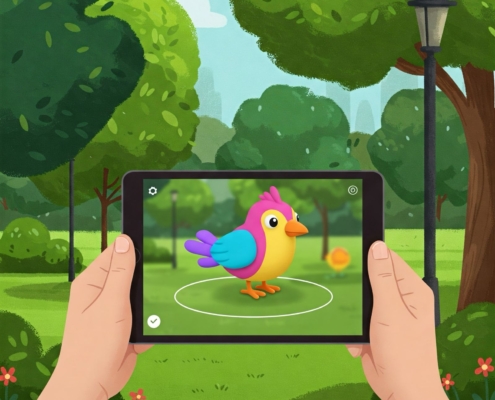
Augmented Reality (AR) overlays digital information, like images, text, or sounds, onto the real world. Unlike Virtual Reality, which creates a completely immersive experience, AR enhances the physical environment with computer-generated elements.
Example: The most common example of AR is the popular mobile game Pokémon Go, where digital Pokémon are placed over real-world locations.
Key Characteristics of AR:
- Real-world interaction: AR blends virtual objects with real-world settings in real-time.
- Device dependency: AR can be experienced using smartphones, tablets, or AR glasses like Microsoft’s HoloLens or Google Glass.
- Augmentation of environment: Enhances perception by adding layers of digital data.
Real-Life Uses of Augmented Reality:
- Retail: Companies like IKEA use AR to allow customers to visualize how furniture would look in their homes before purchasing.
- Education: AR apps help students interact with 3D models, such as human anatomy, improving engagement and understanding.
- Healthcare: Surgeons use AR to overlay critical information during surgeries, such as 3D scans or anatomical data, to improve precision.
AR vs VR vs MR: What is Virtual Reality (VR)?
Defining Virtual Reality
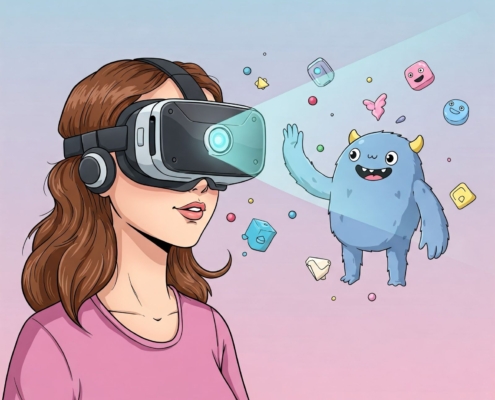
Virtual Reality (VR) creates a fully immersive digital environment, blocking out the physical world completely. It requires a VR headset, such as the Oculus Rift or HTC Vive, to place the user into a 360-degree virtual world.
Example: VR gaming is a key area where users are transported into entirely new worlds, such as in games like Beat Saber or Half-Life: Alyx.
Key Characteristics of VR:
- Immersion: VR experiences immerse users in entirely virtual environments.
- Isolation from reality: Users are fully detached from the physical world, interacting only with the digital world.
- Headset required: VR typically needs specialized hardware like headsets, controllers, or motion trackers to function.
Real-Life Uses of Virtual Reality:
- Gaming: VR has revolutionized gaming, offering interactive and immersive experiences in fully virtual worlds.
- Healthcare: VR is used for therapy, such as in the treatment of PTSD, where users are immersed in calming virtual environments to reduce anxiety.
- Training and Simulations: In industries like aviation, VR is used to simulate flight scenarios, allowing trainees to practice without the risks associated with real-world exercises.
AR vs VR vs MR: What is Mixed Reality (MR)?
Defining Mixed Reality
Mixed Reality (MR) is a blend of both augmented and virtual reality, combining the real world with virtual objects in such a way that they can interact and coexist. MR technology enables users to manipulate real-world elements with digital enhancements in a way that feels natural and seamless.
Example: Microsoft HoloLens allows users to interact with holograms placed within their physical space, merging virtual and real objects in real time.
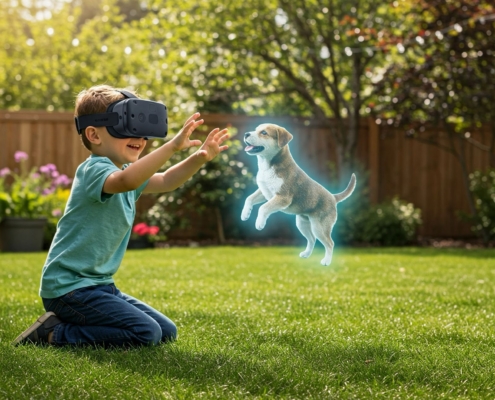
Key Characteristics of MR:
- Interaction with real and virtual worlds: Unlike AR and VR, MR enables interaction between real-world elements and virtual objects.
- Immersive and interactive: Users can manipulate and interact with both virtual and real elements in real-time, often using gestures or voice commands.
- Hardware: Devices like Microsoft HoloLens and Magic Leap support MR experiences with advanced sensors, cameras, and projectors.
Real-Life Uses of Mixed Reality:
- Education: MR allows for more immersive learning experiences where students can interact with 3D models or manipulate scientific data in real time.
- Architecture & Design: Architects use MR to visualize 3D models of buildings in real-world environments, allowing them to make adjustments in real-time.
- Manufacturing: In industries like automotive, MR helps engineers visualize designs and simulate product assembly processes.
AR vs VR vs MR: Key Differences
| Feature | Augmented Reality (AR) | Virtual Reality (VR) | Mixed Reality (MR) |
|---|---|---|---|
| Immersion | Enhances the real world | Completely replaces the real world | Blends the real and virtual worlds |
| Device Used | Smartphones, tablets, AR glasses | VR headsets (Oculus Rift, HTC Vive) | MR headsets (Microsoft HoloLens) |
| User Interaction | Interacts with virtual objects placed in the real world | Interacts with a virtual environment | Interacts with both real and virtual objects |
| Real-World Presence | Yes | No | Yes |
| Examples | Pokémon Go, IKEA Place | Beat Saber, Half-Life: Alyx | Microsoft HoloLens, Magic Leap |
AR vs VR vs MR: Future
Each of these immersive technologies is evolving rapidly, and the potential applications are vast:
- AR is likely to be integrated into daily life through smart glasses, enhancing everything from navigation to product recommendations.
- VR is expanding beyond gaming, with potential use cases in education, healthcare, and virtual tourism.
- MR is bridging the gap between physical and virtual worlds, with industries like manufacturing and design already beginning to embrace its capabilities.
As these technologies mature, we can expect to see them become more integrated into business, education, healthcare, and entertainment, creating opportunities for new and innovative applications.
Conclusion
While AR, VR, and MR are all forms of immersive technology, they each offer a unique experience. AR enhances reality with digital elements, VR immerses users in a completely virtual world, and MR blends both to create a dynamic interaction between the physical and digital realms.
The real-world applications of these technologies are already transforming industries like gaming, education, healthcare, and retail. As the technologies continue to evolve, we’ll see even more exciting and groundbreaking uses that will change how we interact with the world around us.
As AR vs VR vs MR technologies evolve, their combined impact will redefine how humans interact with digital and physical environments.
If you’re interested in how AI is changing parenting, read our detailed blog How AI is changing the way we parent




Leave a Reply
Want to join the discussion?Feel free to contribute!