
Indian Education
Indian Education is on the brink of a major transformation, thanks to the rise of Artificial Intelligence (AI). Traditionally known for its rigorous exams, rote learning methods, and textbook-centric approach, India’s education landscape is evolving rapidly to meet the needs of a digital future.
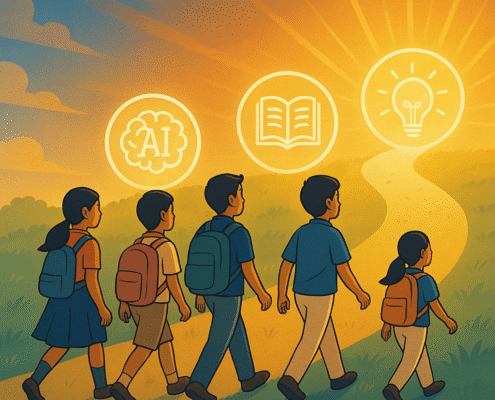
The integration of artificial intelligence into Indian Education is redefining how students learn, teachers teach, and institutions evolve in a digital-first era.
From personalized learning experiences and smart classrooms to AI tutors and predictive analytics for student success, artificial intelligence is unlocking possibilities that were once unimaginable. As India moves towards greater digital inclusion with initiatives like the National Education Policy (NEP 2020) and Digital India, AI’s role is set to become even more significant in bridging educational gaps, making quality education accessible, and preparing students for a future driven by innovation.
According to the National Education Policy (NEP) 2020, technology and AI will play a key role in transforming Indian Education and improving learning outcomes across the country.
Link:
https://www.education.gov.in/nep/about-nep
Global research also highlights how artificial intelligence is reshaping education systems worldwide, as explained by UNESCO’s report on AI in education.
Link:
https://www.unesco.org/en/artificial-intelligence/education
In this blog, we’ll dive deep into how AI is set to revolutionize Indian education, the opportunities it brings, the challenges we must navigate, and what the future could look like for students, teachers, and policymakers alike.
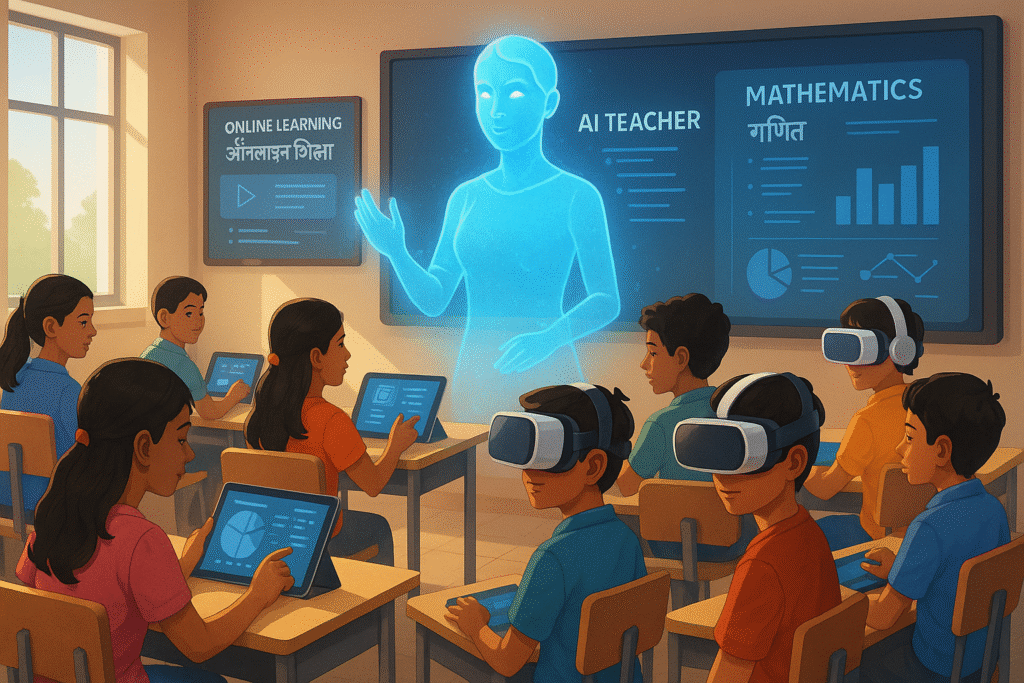
Personalized Learning for Every Student
One of the biggest promises of AI in education is personalized learning. Instead of a one-size-fits-all curriculum, AI algorithms can analyze a student’s strengths, weaknesses, learning pace, and preferences to customize lessons accordingly.
Platforms like Byju’s, Vedantu, and Toppr already use AI to recommend personalized study plans for students across India.
Example: A student weak in mathematics could automatically receive additional practice exercises and video tutorials based on their performance analytics.
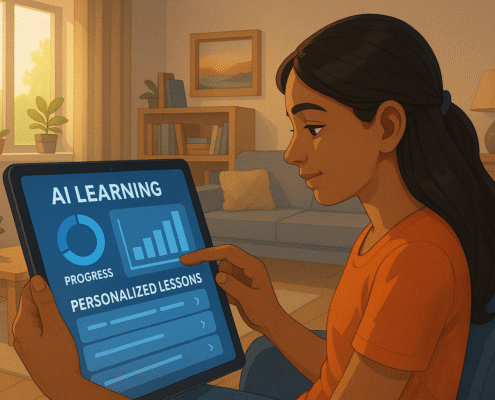
Smarter Classrooms with AI Tools
AI-powered tools like smart boards, automated attendance systems, and virtual reality (VR) learning environments are making classrooms smarter and more interactive.
Teachers can use AI to create engaging content, track student participation, and automate grading systems to save time and focus on better teaching strategies.
Example: AI-based apps can suggest real-time quizzes or activities depending on how well students are grasping a concept during the lesson.
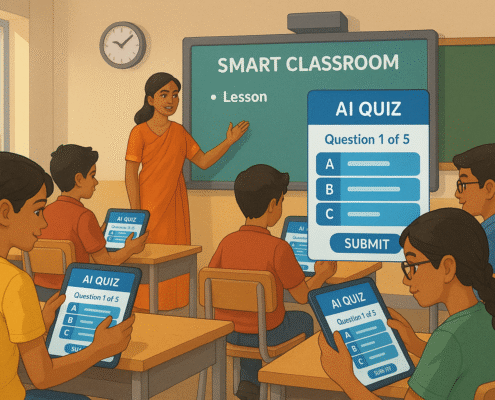
AI Tutors and Virtual Assistants
AI chatbots and virtual teaching assistants can provide 24/7 learning support.
They can help clarify doubts instantly, offer quick revision material, and even simulate mock interviews or tests for competitive exams like NEET, JEE, or UPSC.
Example: Chatbots like “ShikshaBot” can answer students’ basic questions anytime, reducing the workload on human teachers.
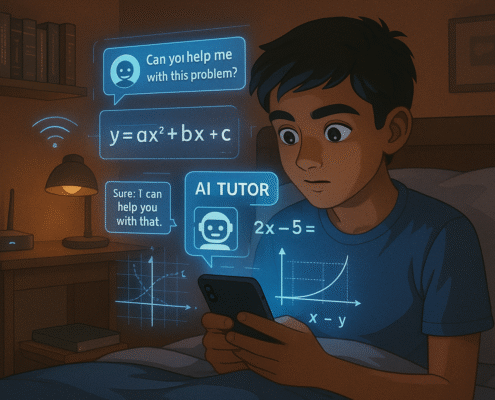
Predictive Analytics for Student Success
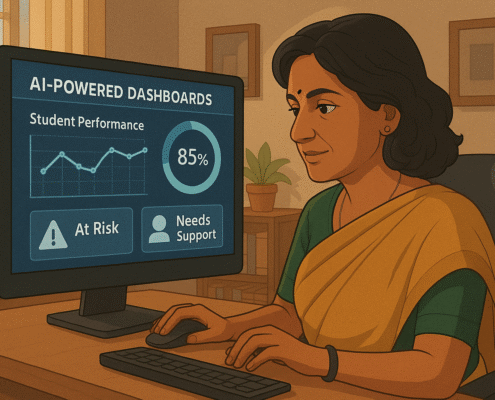
AI can analyze huge amounts of student data to predict learning outcomes.
It can identify students at risk of falling behind, suggest interventions, and help teachers and parents track academic progress in real-time.
Example: Universities can use AI dashboards to detect students who might need additional support before exams, ensuring no one is left behind.
Breaking Language and Accessibility Barriers
India is a diverse country with dozens of languages spoken across regions.
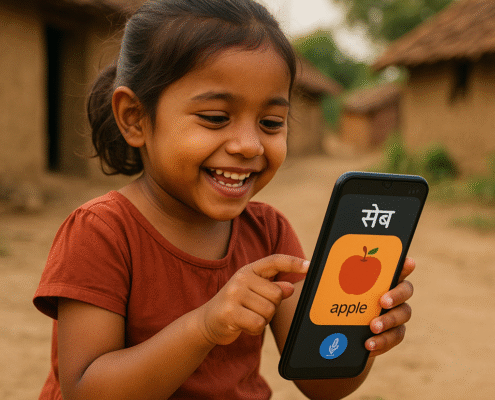
AI-based translation tools, text-to-speech apps, and adaptive content delivery systems make it easier to deliver education in multiple Indian languages and formats, catering to students from rural, tribal, and differently-abled backgrounds.
Example: Tools like Google’s Bolo app help children in rural India learn English and Hindi through voice-based interaction.
Challenges and Concerns
While AI brings immense opportunities, it also comes with challenges:
- Data privacy and security concerns
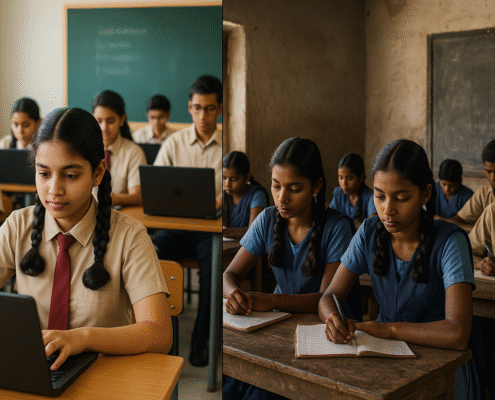
- Risk of increasing inequality (urban vs rural tech access)
- Need for teacher training to adapt to AI tools
- Fear of over-reliance on technology and loss of human touch in education
The government, tech companies, and educational institutions must work together to ensure ethical AI usage and equal access for all students.
The Future of Indian Education
In the coming years, we can expect:
- Hybrid learning models (physical + digital classes)
- AI-driven career counseling services
- Customized skill-building programs based on AI analytics
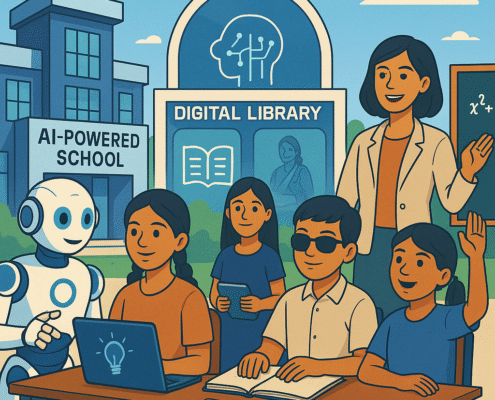
- Better inclusion for students with disabilities
- Smarter policy-making with real-time educational data
AI won’t replace teachers, but it will empower them to be more effective mentors, facilitators, and guides.
Conclusion
Artificial Intelligence is not just a futuristic dream for Indian education—it is already here and rapidly growing.
By blending the best of technology with traditional learning methods, AI can create a system where education is more inclusive, personalized, efficient, and meaningful for every student, regardless of their background.
You may also find our article on how UPI changed India’s digital economy helpful for understanding how transformative technologies shape education and other sectors.
With responsible adoption of AI, Indian Education can become more inclusive, adaptive, and future-ready.
As India steps into a new era of education in 2025 and beyond, embracing AI responsibly and thoughtfully will be the key to shaping a smarter, stronger, and more equitable future.




Leave a Reply
Want to join the discussion?Feel free to contribute!