
AC Gas Leaks: Causes & Prevention
Air conditioners are essential for keeping homes cool, but they require proper maintenance to function efficiently. One of the most common issues AC owners face is gas leakage, which can lead to poor cooling, increased electricity bills, and potential damage to the unit. Understanding why AC gas leaks happen and how to prevent them is crucial for maintaining the longevity and performance of your air conditioner.
Gas leaks not only reduce cooling efficiency but can also be harmful to the environment. In India, where AC usage is widespread due to extreme temperatures, it is important to ensure that your unit is well-maintained and leak-free. This guide explores the causes of AC gas leaks, their impact, and preventive measures to keep your cooling system running smoothly.

Causes of AC Gas Leaks
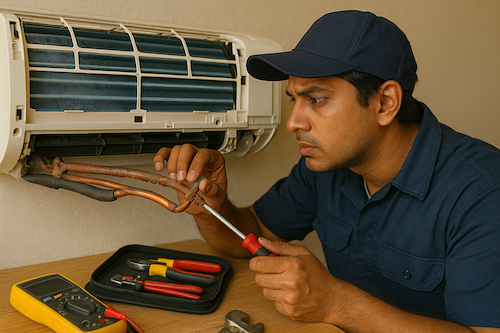
AC gas leaks occur due to several reasons, ranging from poor installation to regular wear and tear. Here are the most common causes:
Improper Installation
- Faulty installation of copper pipes and joints can result in leaks.
- Incorrectly fitted connectors and loose fittings cause gas to escape over time.
Corrosion of Copper Pipes
- Continuous exposure to moisture, humidity, and pollutants leads to corrosion.
- Acidic condensate can slowly erode the pipes, creating small holes.
Manufacturing Defects
- Some AC units may have weak joints or substandard materials that fail prematurely.
- A poorly constructed evaporator or condenser coil can develop leaks quickly.
Regular Wear and Tear
- Frequent use causes minor leaks in joints, coils, and connections.
- Vibrations from the compressor can weaken the piping over time.
Physical Damage
- Accidental hits, improper cleaning, or mishandling during maintenance can cause leaks.
- Rodent bites and insects can damage the insulation and expose pipes.
High Pressure in the System
- Excess refrigerant or overheating can increase system pressure, leading to leaks.
- Blocked filters and airflow restrictions cause the compressor to work harder, damaging pipes.
How to Detect an AC Gas Leak
It is essential to identify gas leaks early to avoid costly repairs. Here are common signs:
Reduced Cooling Efficiency: The AC is running but not cooling effectively.
Hissing Sound: A faint hissing noise may indicate a refrigerant leak.
Increased Electricity Bills: Your AC consumes more power due to inefficient cooling.
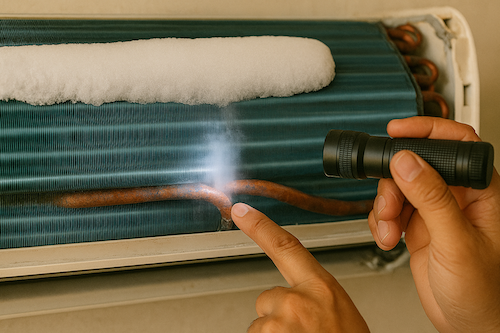
Ice Formation on Coils: Refrigerant leaks cause ice buildup on the evaporator coils.
Foul Odor: A chemical smell may be present in case of refrigerant leakage.
Oil Stains Around the AC Unit: Gas leaks sometimes leave behind oil traces on pipes and connectors.
If you notice any of these signs, contact a professional technician immediately.
Prevention of AC Gas Leaks
Preventive maintenance is key to avoiding AC gas leaks. Here’s how you can keep your AC in top condition:
Regular AC Servicing
- Schedule professional maintenance at least once every 6 months.
- Get gas levels checked and ensure there are no weak joints or loose connections.
Use High-Quality Copper Pipes
- Opt for thick, high-grade copper pipes to prevent corrosion.
- Ensure proper insulation of pipes to minimize external damage.
Ensure Proper Installation
- Always hire certified professionals for installation.
- Use proper welding techniques to secure joints and prevent leaks.
Avoid Overloading the AC
- Keep filters clean and ensure proper ventilation to avoid pressure buildup.
- Avoid excessive usage; give the AC regular breaks.
Check for Physical Damage
- Inspect the AC unit regularly for signs of wear and tear.
- Keep the outdoor unit protected from extreme weather conditions.
Replace Worn-Out Components
- If pipes, coils, or connectors show signs of wear, replace them before they cause leaks.
- Use original manufacturer parts for repairs.
What to Do If Your AC Has a Gas Leak?
If you suspect a gas leak, follow these steps:
- Turn Off the AC – Running the AC with a gas leak can cause further damage.
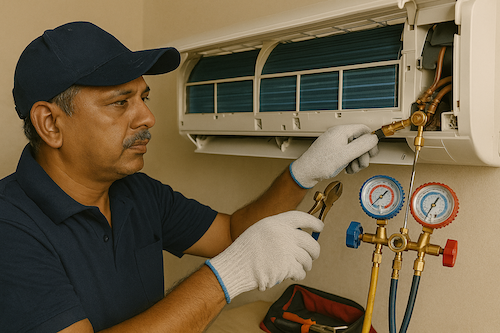
- Contact a Professional – Get an authorized technician to inspect and repair the unit.
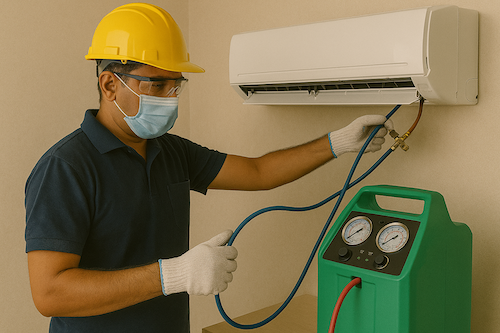
- Refill Refrigerant Gas – Once the leak is fixed, recharge the AC with the correct refrigerant.
- Test the System – Ensure proper cooling efficiency before regular usage.
- Monitor for Future Leaks – Conduct periodic checks to prevent recurring issues.
How to Avoid AC Gas Leaks in the Long Run
Preventing AC Gas Leaks starts with regular maintenance and timely inspections. Homeowners should schedule professional servicing at least once or twice a year to identify early signs of AC Gas Leaks before they become serious problems. Investing in quality installation, corrosion-resistant copper piping, and genuine replacement parts can significantly reduce the chances of AC Gas Leaks. If you notice poor cooling performance, ice formation, or unusual noises, don’t ignore them, as these could indicate AC Gas Leaks that require immediate attention. Taking proactive steps to prevent AC Gas Leaks not only improves cooling efficiency but also lowers electricity bills and extends the lifespan of your air conditioner.
Frequently Asked Questions (FAQs)
Can AC gas leak without visible signs?
Yes. Small AC gas leaks may only cause reduced cooling or higher electricity bills before becoming noticeable.
How often should AC gas be refilled?
Refrigerant should not need regular refilling. If your AC requires frequent gas refills, it likely has an AC gas leak that needs repair.
Is an AC gas leak dangerous?
Most modern refrigerants are not highly toxic, but AC gas leaks can reduce cooling performance and should be repaired promptly by a qualified technician.
Conclusion
To better understand how to choose, maintain, and improve the performance of your air conditioner, don’t miss our detailed on Information Unboxed on Air Conditioner Buying Guide – 2026, where you’ll find expert tips on selecting the right AC, improving cooling efficiency, and reducing electricity bills. (Internal Link: Your Air Conditioner Buying Guide – 2026 article)
For official guidance on energy-efficient air conditioners and best practices for reducing electricity consumption, visit the Bureau of Energy Efficiency (BEE): https://www.beeindia.gov.in/. This government resource provides valuable information on AC star ratings, energy efficiency standards, and smart cooling practices. (DoFollow External Link)
AC gas leaks can be a major issue, affecting both performance and energy consumption. By understanding the causes and implementing preventive measures, you can ensure that your air conditioner runs efficiently for years. Regular servicing, quality materials, and proper installation play a crucial role in preventing leaks.
If you notice signs of leakage, take immediate action to prevent further damage. A well-maintained AC not only keeps your home cool but also helps save energy and maintenance costs. Stay proactive and enjoy uninterrupted cooling all year round!





Leave a Reply
Want to join the discussion?Feel free to contribute!