
AI in Surveillance: Shaping the Future of Security
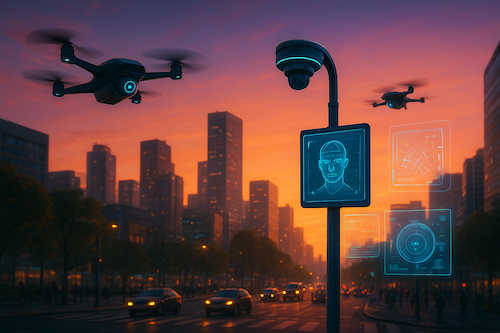
AI in Surveillance is transforming the way we approach security and monitoring, bringing unprecedented capabilities to surveillance systems. From ensuring public safety to enhancing private security, AI-driven surveillance has emerged as a powerful tool that combines efficiency and intelligence. Yet, its growing presence also sparks debates about ethics and privacy, making it a technology both celebrated and scrutinized.
AI in Surveillance is becoming an important part of modern security because it helps detect threats, monitor public spaces, improve home safety, and analyze video footage in real time. From facial recognition and object detection to traffic monitoring, smart cameras, crowd analysis, and predictive security alerts, AI in Surveillance is making monitoring systems faster, smarter, and more responsive. As cities, offices, airports, and residential communities adopt intelligent security tools, AI in Surveillance also raises important questions about privacy, bias, transparency, and responsible use.
The growth of AI in Surveillance shows how security systems are moving from manual monitoring to automated, real-time decision support. A balanced approach to AI in Surveillance should focus on public safety, ethical use, data protection, and human oversight. Understanding AI in Surveillance can help readers see both the benefits and risks of using AI-powered cameras, sensors, and monitoring tools.
For a helpful external reference, readers can explore the NIST AI Risk Management Framework here: https://www.nist.gov/itl/ai-risk-management-framework. You can also read our related internal article on Regulating AI here: https://www.informationunboxed.com/regulating-ai-balancing-innovation-responsibility/ to understand why ethical rules are important for AI in Surveillance and other AI-driven technologies.
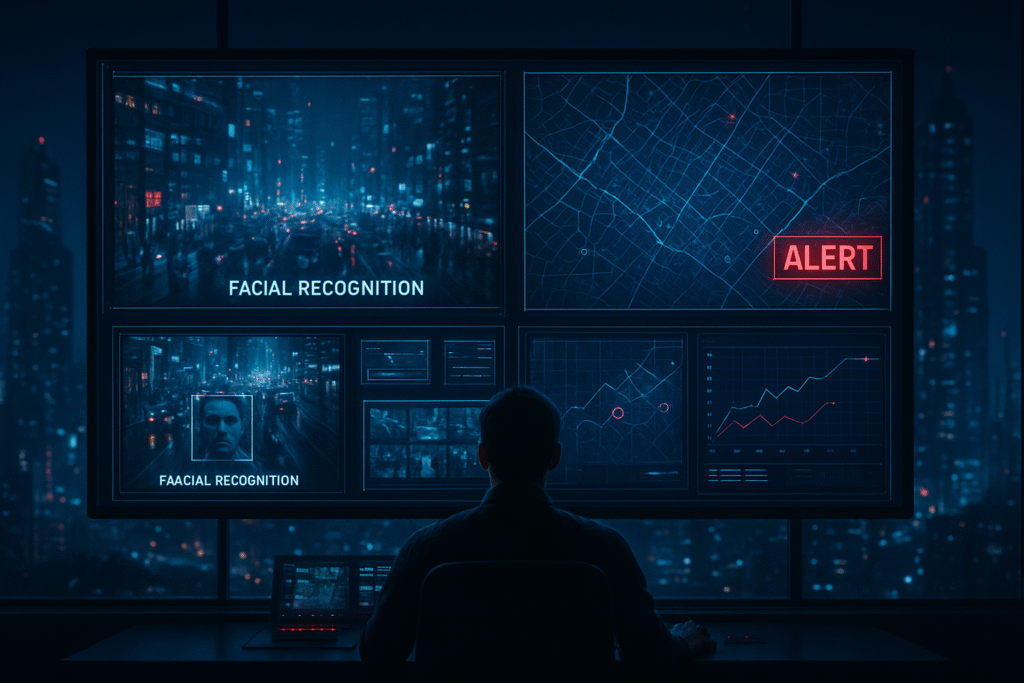
How Does AI in Surveillance Work?
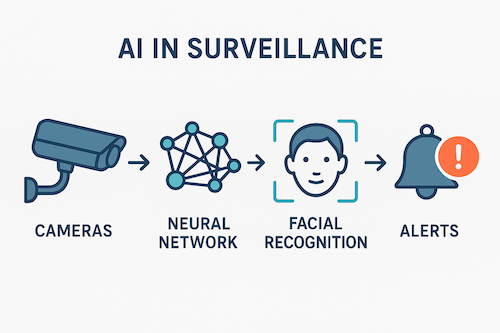
AI surveillance systems rely on advanced technologies such as computer vision, machine learning, and neural networks. These systems process data from video feeds, sensors, and other inputs to identify patterns, detect anomalies, and make real-time decisions. For example, facial recognition software analyzes unique facial features to identify individuals, while behavior analysis tools monitor movements to flag unusual activities. The integration of AI allows these systems to operate autonomously, reducing the need for constant human oversight and enabling more precise and timely responses.
The Past History of Surveillance
Surveillance has evolved significantly over the decades. Traditional systems relied on Closed-Circuit Television (CCTV) cameras, which required manual monitoring by security personnel. While effective to some extent, these systems were labor-intensive and prone to human error. The early 2000s saw the introduction of digital video recording (DVR) systems, which made it easier to store and retrieve footage. However, these systems were still reactive, focusing on reviewing events after they occurred.
The advent of AI brought a paradigm shift in surveillance. By automating tasks like video analysis and threat detection, AI transformed surveillance from a passive tool into a proactive system capable of preventing incidents before they occur.
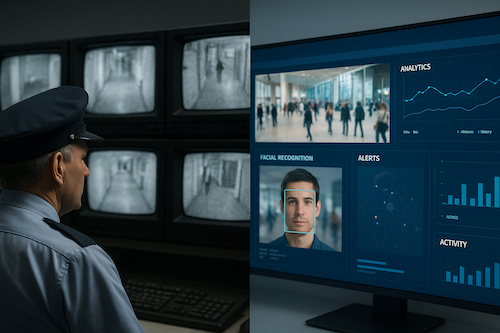
AI in Surveillance Today
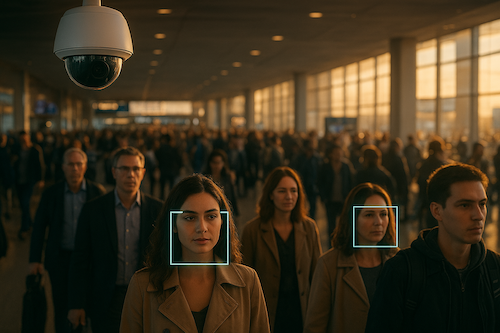
In the present day, AI-powered surveillance is widely used across industries and public spaces. From airports and smart cities to corporate offices and residential complexes, AI has become an integral part of modern security. Key applications include:
- Facial Recognition: Identifying individuals for security or attendance purposes.
- Object Detection: Spotting suspicious items like unattended bags.
- Behavior Analysis: Monitoring crowd behavior or identifying unusual movements.
- Traffic Management: Tracking vehicles and enforcing traffic laws using license plate recognition.
- Smart Home Security: Enhancing home safety with AI-enabled cameras and sensors.
AI systems today are highly efficient and capable of analyzing vast amounts of data in real time, making them indispensable for modern security needs.
The Future of AI in Surveillance
As AI technology advances, the future of surveillance looks even more promising. Emerging trends include:
- Predictive Surveillance: AI systems will predict threats based on historical and real-time data, enabling preventive measures.
- Edge Computing: Data processing will occur locally on devices, reducing latency and enhancing security.
- Ethical AI Development: Efforts will focus on creating transparent and unbiased AI systems.
- Integration with IoT: Surveillance systems will connect seamlessly with other devices, creating a more comprehensive security network.
While the future holds immense potential, it will also demand stricter regulations to ensure ethical and responsible use.
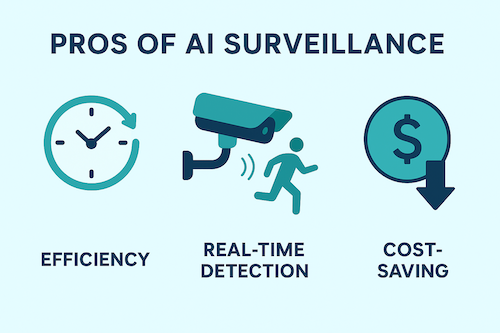
Pros of AI in Surveillance
- Enhanced Efficiency: Automates tasks, reducing the workload on security personnel.
- Real-Time Threat Detection: Identifies and responds to threats instantly.
- Cost-Effective: Lowers long-term costs by minimizing human labor and preventing incidents.
- Scalability: Handles large-scale surveillance across multiple locations.
- Improved Accuracy: Reduces errors and provides unbiased monitoring.
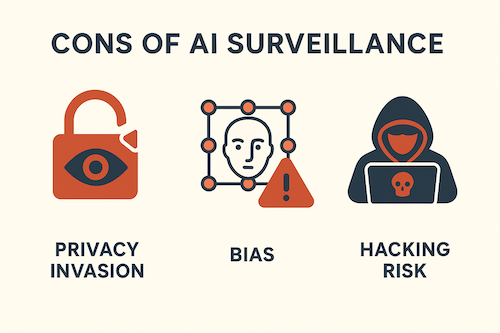
Cons of AI in Surveillance
- Privacy Concerns: Constant monitoring can feel invasive and lead to misuse of personal data.
- Bias in Algorithms: AI systems may unintentionally reinforce existing biases in their training data.
- Cybersecurity Risks: Connected systems are vulnerable to hacking and data breaches.
- Ethical Challenges: Raises questions about fairness, transparency, and accountability.
- Over-Reliance on Technology: Human oversight may diminish, leading to critical threats being overlooked if systems fail.
Conclusion
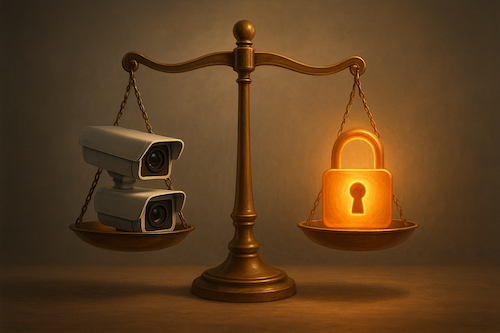
AI in surveillance is undeniably transforming the way we secure our spaces, offering enhanced efficiency, accuracy, and predictive capabilities. However, its rise also brings significant ethical and privacy challenges that cannot be ignored. Striking a balance between innovation and responsibility is crucial to ensure that AI serves as a force for good.
As we move forward, the key lies in adopting transparent and ethical AI practices, backed by robust regulations and privacy protections. By doing so, we can harness the full potential of AI-driven surveillance while safeguarding individual rights, creating a future where security and ethics coexist seamlessly.
Frequently Asked Questions About AI in Surveillance
1. What is AI in Surveillance?
AI in Surveillance refers to the use of artificial intelligence in security cameras, monitoring systems, sensors, and video analytics tools. It helps detect people, objects, vehicles, suspicious activity, and unusual behavior automatically without depending only on manual monitoring.
2. How does AI in Surveillance work?
AI in Surveillance works by using technologies like computer vision, machine learning, facial recognition, object detection, and behavior analysis. These systems analyze video feeds and sensor data in real time to identify patterns, detect threats, and send alerts when unusual activity is found.
3. What are the benefits of AI in Surveillance?
The main benefits of AI in Surveillance include faster threat detection, real-time alerts, improved public safety, better home security, reduced manual monitoring, and more accurate video analysis. It can also help with traffic management, crowd monitoring, and smart city security.
4. Where is AI in Surveillance used?
AI in Surveillance is used in airports, railway stations, offices, shopping malls, smart cities, traffic systems, residential societies, schools, warehouses, and smart homes. It is also used in video doorbells, AI cameras, and business security systems.
5. What are the privacy concerns with AI in Surveillance?
The biggest privacy concerns with AI in Surveillance include constant monitoring, facial recognition misuse, data storage risks, lack of consent, and possible tracking of individuals. To reduce these risks, organizations should follow clear privacy rules, limit data collection, and use transparent security policies.
6. Can AI in Surveillance make mistakes?
Yes, AI systems can make mistakes if they are trained on poor-quality or biased data. For example, facial recognition may misidentify people, or behavior analysis may flag normal activity as suspicious. This is why human review, regular audits, and responsible AI practices are important.
7. What is the future of AI in Surveillance?
The future of AI in Surveillance will likely include smarter cameras, predictive threat detection, edge computing, better privacy controls, real-time video analytics, and stronger regulations. As the technology improves, the focus will be on balancing security benefits with ethical and privacy protection.




Leave a Reply
Want to join the discussion?Feel free to contribute!