
AI Privacy and Data Protection: Safeguarding the Future
Artificial Intelligence (AI) has become a cornerstone of modern innovation, transforming industries, streamlining operations, and personalizing experiences. However, as AI evolves, so do concerns about privacy and data protection. The intersection of AI with sensitive personal data poses ethical, legal, and technological challenges that demand immediate attention. This article delves into the intricacies of AI privacy and data protection, offering insights into its implications and how we can safeguard our digital future.
AI Privacy and Data Protection is becoming more important as artificial intelligence systems collect, process, and analyze large amounts of personal data. From facial recognition and healthcare records to browsing behavior, financial data, smart devices, and personalized recommendations, AI Privacy and Data Protection helps ensure that user information is handled safely, fairly, and transparently. A strong approach to AI Privacy and Data Protection should include user consent, data minimization, encryption, anonymization, regular audits, transparency, and compliance with privacy laws.
For a helpful external reference, readers can explore the NIST AI Risk Management Framework, which focuses on managing AI risks including privacy, safety, transparency, and fairness: https://www.nist.gov/itl/ai-risk-management-framework. You can also read our related internal article on Regulating AI here: https://www.informationunboxed.com/regulating-ai-balancing-innovation-responsibility/ to understand how responsible AI rules support AI Privacy and Data Protection in modern technology.

Understanding AI’s Reliance on Data
AI systems thrive on data. They analyze vast datasets to identify patterns, make predictions, and deliver insights. This dependency on data often involves collecting and processing personal information, ranging from browsing habits and purchase history to health records and facial recognition. While such data enables AI to offer personalized experiences, it also amplifies the risk of misuse.
The problem arises when data collection becomes intrusive or when individuals’ sensitive information is exposed to unauthorized entities. The more data an AI system processes, the higher the stakes for privacy breaches.
Key Privacy Concerns in AI
- Data Collection Without Consent: Many AI applications collect user data without explicit consent, often hidden within lengthy terms and conditions.
- Bias and Discrimination: AI systems can inadvertently perpetuate biases if trained on biased datasets, leading to unfair treatment of certain groups.
- Data Breaches: Large-scale AI systems are prime targets for cyberattacks, potentially exposing sensitive personal data.
- Lack of Transparency: The “black box” nature of many AI algorithms makes it difficult to understand how decisions are made, raising accountability issues.

Legal Frameworks Addressing AI Privacy
Governments worldwide are grappling with the challenges of regulating AI to ensure data protection. Some notable frameworks include:
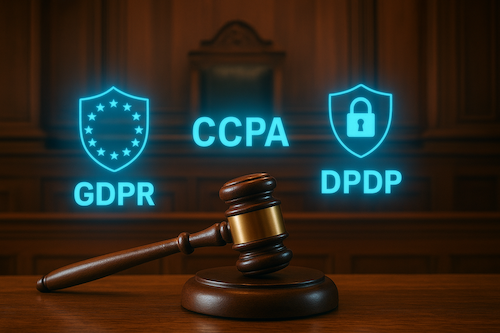
- General Data Protection Regulation (GDPR): Enforced in the European Union, GDPR mandates strict guidelines for data collection, storage, and processing. It emphasizes user consent and grants individuals the right to access, rectify, or delete their data.
- California Consumer Privacy Act (CCPA): This U.S. regulation gives consumers greater control over their personal information, requiring businesses to disclose data collection practices.
- India’s Digital Personal Data Protection Act (DPDP): A newly introduced framework focused on safeguarding individuals’ personal data while promoting accountability for data processors.
These frameworks, though promising, need continuous updates to address the unique challenges posed by AI.
How AI Developers and Businesses Can Ensure Data Protection
- Implement Privacy by Design: Incorporate privacy measures into AI systems during the development phase rather than as an afterthought.
- Anonymize Data: Use techniques like data masking or encryption to ensure personal data cannot be traced back to individuals.
- Conduct Regular Audits: Regularly assess AI systems for compliance with privacy laws and identify potential vulnerabilities.
- Enhance Transparency: Clearly communicate how AI systems use data and provide users with control over their personal information.
- Adopt Ethical AI Practices: Prioritize fairness, accountability, and transparency to build trust and minimize harm.

The Role of Individuals in Protecting Their Data
While developers and organizations play a crucial role, individuals must also take proactive steps to protect their privacy:
- Read Privacy Policies: Understand how your data is being collected and used before engaging with an AI-powered service.
- Limit Data Sharing: Share only essential information and avoid oversharing on platforms.
- Use Privacy Tools: Leverage tools like virtual private networks (VPNs), ad blockers, and privacy-focused browsers.
- Stay Informed: Keep up with privacy rights and technological advancements to make informed decisions.

The Future of AI Privacy and Data Protection
As AI continues to advance, the push for stronger privacy measures will grow. Emerging technologies like federated learning, differential privacy, and blockchain hold promise in minimizing data risks while maximizing AI’s potential. However, achieving a balance between innovation and privacy will require collaboration among governments, businesses, and individuals.
Ultimately, safeguarding privacy in the age of AI is not just about compliance but about fostering trust. When handled responsibly, AI can transform lives without compromising the fundamental right to privacy. It’s a challenge that must be met head-on, ensuring that as we innovate, we also protect what matters most—our personal data.

Frequently Asked Questions About AI Privacy and Data Protection
1. What is AI Privacy and Data Protection?
AI Privacy and Data Protection refers to the practices, rules, and technologies used to protect personal data when artificial intelligence systems collect, process, analyze, or store information. It helps ensure that user data is handled safely, fairly, and transparently.
2. Why is AI Privacy and Data Protection important?
AI Privacy and Data Protection is important because AI systems often use sensitive data such as browsing behavior, health records, financial details, location data, and facial recognition information. Without proper protection, this data can be misused, leaked, or processed without user consent.
3. What are the main privacy risks of AI?
The main privacy risks of AI include unauthorized data collection, lack of user consent, data breaches, biased decision-making, identity tracking, surveillance misuse, and unclear algorithmic decisions. These risks make strong data protection practices essential.
4. How can businesses improve AI Privacy and Data Protection?
Businesses can improve AI Privacy and Data Protection by using privacy-by-design methods, collecting only necessary data, encrypting sensitive information, anonymizing user data, conducting regular audits, following data protection laws, and clearly explaining how AI systems use personal information.
5. What laws protect data privacy in AI?
Important data privacy laws include the GDPR in the European Union, the CCPA in California, and India’s Digital Personal Data Protection Act. These laws focus on user consent, data rights, transparency, accountability, and safer handling of personal information.
6. How can individuals protect their data from AI systems?
Individuals can protect their data by reading privacy policies, limiting unnecessary data sharing, using strong passwords, reviewing app permissions, avoiding suspicious platforms, using privacy-focused tools, and staying informed about how AI-powered services collect and use personal information.
7. What is the future of AI Privacy and Data Protection?
The future of AI Privacy and Data Protection will likely include stronger privacy laws, better transparency tools, privacy-preserving AI methods, data anonymization, federated learning, AI audits, and more user control over personal data. As AI grows, protecting privacy will become even more important.




Leave a Reply
Want to join the discussion?Feel free to contribute!