
How to Spot Fake Job Offers & Online Scams
Fake Job Offers are becoming increasingly common as scammers target job seekers through email, social media, messaging apps, and fake recruitment websites. While online job portals have made finding opportunities easier, they have also created new ways for fraudsters to exploit unsuspecting candidates.
Fake Job Offers can lead to financial loss, identity theft, and cybersecurity risks if proper precautions are not taken. This guide will help you identify Fake Job Offers, understand common recruitment scams, and learn practical steps to protect yourself while searching for genuine career opportunities.

Common Signs of a Fake Job Offer
Too Good to Be True Offers
If a job promises an unrealistically high salary, work-from-home flexibility, and minimal qualifications with little to no effort, it’s likely a scam. Legitimate jobs have market-standard salaries and clear requirements.
No Clear Job Description or Requirements
A real job will have a clear role, responsibilities, and required skills. If the recruiter is vague about what you will be doing or keeps changing details, be cautious.
Unprofessional Communication
Look out for:
- Emails from free domains like Gmail, Yahoo, or Outlook instead of official company domains.
- Poor grammar, spelling mistakes, and informal language in emails.
- Messages sent via WhatsApp, Telegram, or other informal platforms instead of professional emails.
Immediate Hiring Without an Interview
Scammers often claim that you’ve been selected without an interview or ask for a quick confirmation. Genuine companies follow a structured hiring process with interviews, tests, and background checks.
Request for Payment or Personal Information
- Fake training fees: Some scams ask you to pay for training, software, or background verification.
- Bank account or UPI details: A real employer will never ask for sensitive financial information.
- Identity theft risk: If they request your Aadhaar, PAN, or passport details before hiring, be suspicious.
Types of Job Scams
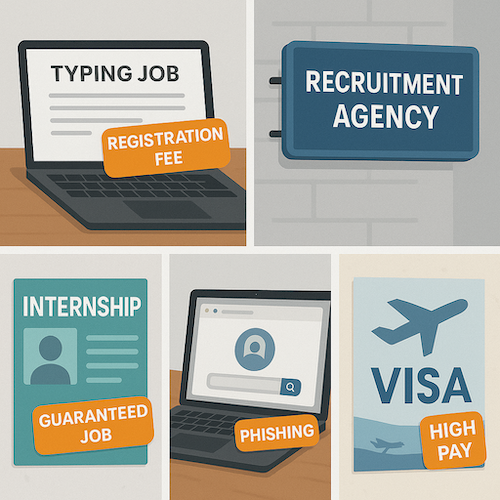
Fake Work-From-Home Jobs
Scammers prey on remote job seekers by offering high pay for simple work like “typing jobs” or “form filling” but later demand a registration fee.
Recruitment Agency Scams
Fraudulent agencies promise guaranteed placement but charge a hefty fee upfront. Legitimate agencies only take their commission from the employer, not the job seeker.
Phishing Emails & Fake Websites
Scammers create fake job portals that mimic real company websites, tricking you into sharing personal details. Always verify the company’s official website before applying.
Fake Internship Offers
Some scammers use internship scams to gather personal data or exploit students for free labor under false promises of a stipend.
Fake Overseas Job Offers
Many scammers target professionals by offering high-paying jobs abroad but demand visa processing fees or travel expenses upfront.
How to Verify If a Job Offer Is Real
Check the Company Website
Look up the company’s official website and see if the job is listed there. Contact them directly through official channels.
Verify the Recruiter’s Email Address
Legitimate companies use professional emails (e.g., hr@companyname.com). Be cautious if the email comes from a personal domain like Gmail, Yahoo, or Outlook.
Search Online for Reviews & Complaints
Check platforms like Glassdoor, LinkedIn, Naukri, and Quora for employee reviews and scam alerts.
Ask for a Video Interview
A genuine employer will be open to face-to-face video calls or formal interviews. Scammers often avoid this step.
Never Share Personal or Financial Details
Employers don’t need your Aadhaar, PAN, or banking details before you officially join. If they ask for it early on, it’s a red flag.
What to Do If You Encounter a Job Scam?
- Stop All Communication – Don’t respond further or provide any more details.
- Report the Scam – File a complaint on platforms like:
- Cyber Crime Portal: https://cybercrime.gov.in/
- Consumer Complaints: https://consumerhelpline.gov.in/
- Job Portals: Report fake jobs on Naukri, LinkedIn, or Indeed.
- Warn Others – Share your experience online to prevent others from falling into the same trap.
- Monitor Your Personal Information – If you shared sensitive data, monitor your bank accounts and credit reports for suspicious activity.

How to Stay Safe from Fake Job Offers
The best defense against Fake Job Offers is careful verification and research. Always investigate the company, verify recruiter credentials, and avoid sharing sensitive information before confirming the legitimacy of the opportunity. Many Fake Job Offers use urgency, unrealistic salaries, and promises of guaranteed hiring to pressure candidates into making quick decisions.
Before accepting any opportunity, compare the details with official company job listings and verify the recruitment process. Staying informed about Fake Job Offers can help job seekers avoid financial scams, phishing attacks, and identity theft.
For more cybersecurity and online safety guidance, check out our on Information Unboxed about articles on Detecting and Avoiding Phishing Scams, Stay Safe Online, Secure Your Digital Wallet & UPI Payments, Dark Web Security: Protecting Your Data, and Essential Windows Security Settings to Enable.
Red Flags That Often Indicate Fake Job Offers
When evaluating opportunities, always watch for warning signs commonly associated with Fake Job Offers. Many Fake Job Offers create a sense of urgency and pressure candidates to act quickly without proper verification. Scammers behind Fake Job Offers often avoid video interviews, use unofficial email addresses, and request payments for training or onboarding. Learning to recognize Fake Job Offers can significantly reduce your chances of becoming a victim of online recruitment fraud.
Conclusion
Fake job offers are increasing, but by staying informed, you can protect yourself from scams. Always research the company, verify recruiter details, and never pay any money upfront for a job. Remember, if it sounds too good to be true, it probably is!
Would you like to read more cybersecurity tips? Let us know in the comments!





Leave a Reply
Want to join the discussion?Feel free to contribute!