
How to Clean Your AC Safely at Home: A Step-by-Step Guide
How to Clean Your AC Safely at Home properly is important if you want better cooling, cleaner indoor air, lower electricity usage, and a longer lifespan for your air conditioner. Over time, dust, dirt, and debris can build up in the filters, coils, vents, and drain pipe, causing your AC to work harder and perform less efficiently. With simple cleaning and basic maintenance, you can keep your AC running smoothly and avoid costly repairs.
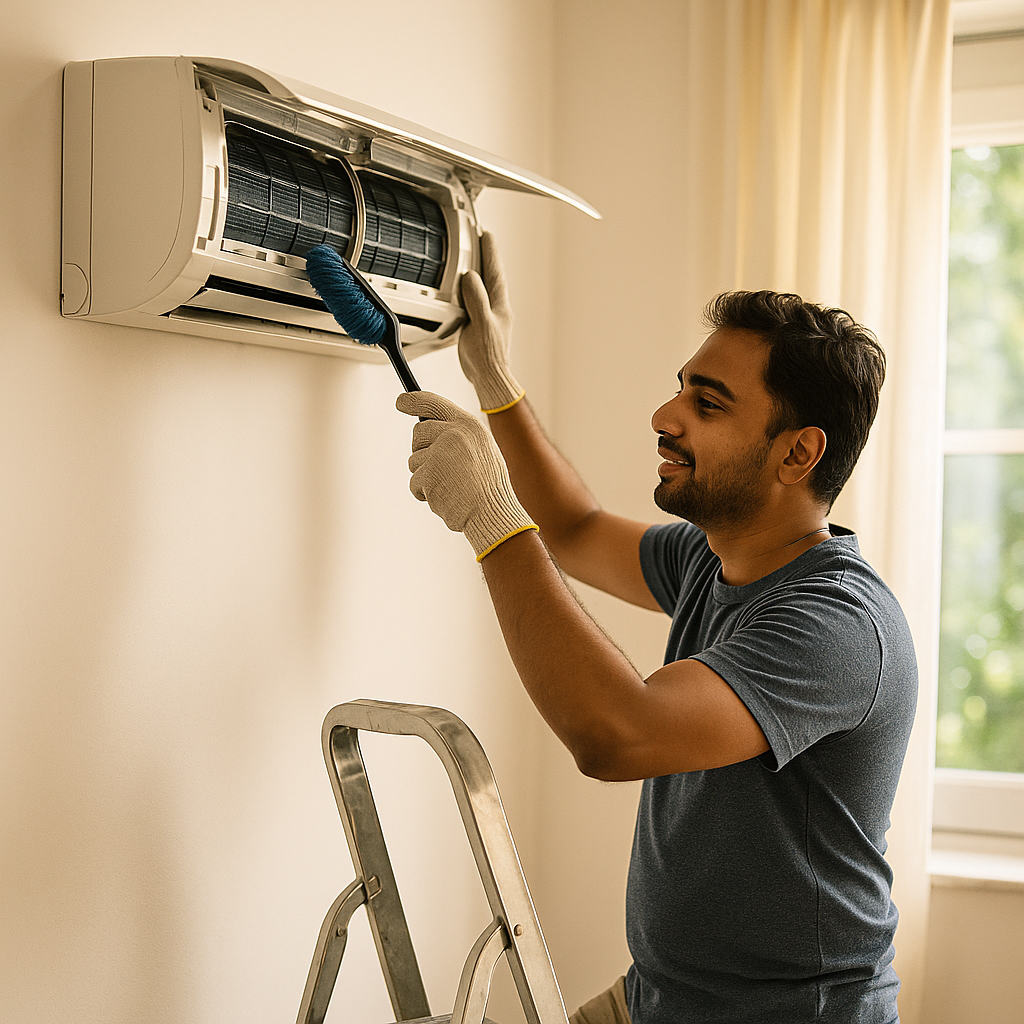
Tools and Materials Needed
Before starting, gather the following tools:
- A soft brush or vacuum cleaner with a brush attachment
- A mild detergent or AC coil cleaner
- A microfiber cloth or sponge
- A fin comb (for straightening coil fins)
- A screwdriver (if required for opening panels)
- A bucket of warm water
Before you Clean Your AC, make sure you understand the basic parts of the unit, including the air filters, evaporator coils, condenser coils, fins, vents, and drain pipe. You can also refer to the U.S. Department of Energy’s guide for trusted maintenance tips. For more helpful home appliance guides, visit our website Information Unboxed.

Step 1: Turn Off and Unplug the AC
For safety, always turn off the AC unit and unplug it from the power source before cleaning. If you have a split AC, switch off the power from the circuit breaker.

Step 2: Clean or Replace the Air Filters
The air filters trap dust and pollutants, making them one of the most crucial parts to clean.
- Open the front panel of the indoor unit (for split AC) or remove the filter cover (for window AC).
- Take out the filters and gently tap them to remove loose dust.
- Wash the filters with mild detergent and warm water, then let them dry completely before reinstalling.
- If the filters are too worn out, replace them with new ones.

Step 3: Clean the Evaporator Coils
The evaporator coils help in cooling the air but can accumulate dirt over time, reducing efficiency.
- Use a vacuum cleaner with a brush attachment to remove loose dust from the coils.
- Spray a coil cleaner or a mild detergent solution on the coils and let it sit for 5–10 minutes.
- Wipe off the residue with a damp microfiber cloth or sponge.

Step 4: Clean the Condenser Coils and Fins (Outdoor Unit)
The outdoor unit contains the condenser coils and fins, which release heat from the AC system.
- Remove any debris, leaves, or dust around the outdoor unit.
- Use a vacuum cleaner or a soft brush to clean the condenser coils.
- Straighten any bent fins using a fin comb to ensure proper airflow.
- If needed, spray the coils with water and wipe them dry.

Step 5: Clean the Drain Pipe and Remove Clogs
The drain pipe removes moisture from the unit, but it can get clogged with dirt and algae.
- Locate the drain pipe and remove any visible blockages.
- Flush warm water through the pipe to clear any internal clogs.
- If necessary, use a mild disinfectant to prevent mold buildup.

Step 6: Wipe Down the Exterior and Vents
- Use a damp microfiber cloth to wipe down the exterior surfaces of the indoor and outdoor units.
- Clean the air vents with a soft brush to remove dust buildup.
- Ensure all panels are securely closed before turning the unit back on.

Step 7: Restart and Test the AC
- Use a damp microfiber cloth to wipe down the exterior surfaces of the indoor and outdoor units.
- Clean the air vents with a soft brush to remove dust buildup.
- Ensure all panels are securely closed before turning the unit back on.

FAQs
1. How often should I clean my AC?
You should clean your AC filters every 2 to 4 weeks during heavy usage. A deeper cleaning of coils, vents, and the outdoor unit can be done every few months, while professional servicing is recommended at least once a year.
2. Can I clean my AC at home?
Yes, you can clean basic parts of your AC at home, such as the filters, vents, exterior panels, and visible dust around the unit. However, for deep coil cleaning, gas checking, electrical issues, or internal repairs, it is better to call a professional technician.
3. Why is it important to know How to Clean Your AC?
Knowing How to Clean Your AC helps improve cooling performance, reduce electricity consumption, maintain better air quality, and extend the lifespan of your air conditioner. Regular cleaning also prevents dust buildup and airflow blockage.
4. What tools do I need to clean my AC?
You may need a soft brush, vacuum cleaner, microfiber cloth, mild detergent, warm water, screwdriver, coil cleaner, and fin comb. Always turn off the AC and unplug it before cleaning.
5. Does cleaning the AC improve cooling?
Yes, cleaning the AC can improve cooling because dust-free filters, coils, and vents allow better airflow. When airflow improves, your AC does not need to work as hard to cool the room.
6. When should I call a professional for AC cleaning?
You should call a professional if your AC is leaking water, making unusual noise, cooling poorly even after cleaning, showing error codes, or if the coils and internal parts need deep servicing.
Conclusion
Knowing How to Clean Your AC properly can make regular maintenance easier and more effective. The safest way to follow How to Clean Your AC is to turn off the power first, clean the filters, remove dust from coils, clear the vents, check the drain pipe, and wipe the outdoor unit carefully.
When you understand How to Clean Your AC step by step, you can improve cooling performance, reduce dust buildup, and lower electricity usage. Many homeowners search for How to Clean Your AC before summer because clean filters and coils help the air conditioner work smoothly during heavy use. By following this guide on How to Clean Your AC, you can keep your AC cleaner, more efficient, and ready for daily cooling.
Cleaning your AC regularly improves efficiency, reduces electricity bills, and ensures better air quality. By following this guide on How to Clean Your AC, you can keep your air conditioner running optimally and extend its lifespan. For deeper maintenance, consider professional servicing at least once a year.



Leave a Reply
Want to join the discussion?Feel free to contribute!