
Self-Driving Cars: 5 Exciting Truths About a Driverless Future
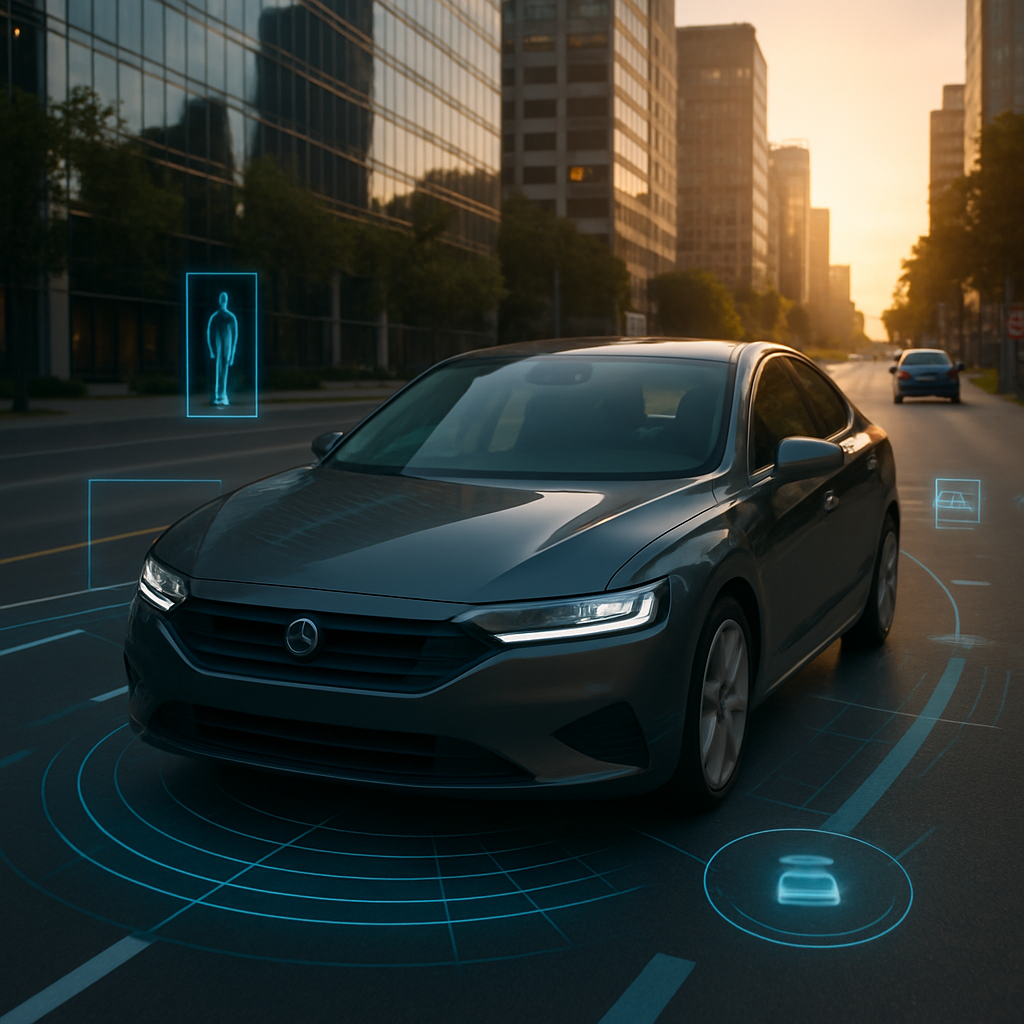
Self-Driving Cars are no longer just a futuristic concept—they are already operating on public roads in select cities around the world. Thanks to rapid advancements in artificial intelligence (AI), machine learning, computer vision, and autonomous driving systems, the automotive industry is closer than ever to achieving large-scale vehicle automation.
Companies such as Tesla, Waymo, Mercedes-Benz, Baidu, and Zoox continue to push the boundaries of autonomous vehicle technology. From robotaxi services to advanced driver-assistance systems, self-driving cars are transforming how people think about transportation.
However, despite significant progress, fully autonomous Level 5 vehicles remain a challenge. Regulatory hurdles, safety concerns, infrastructure limitations, and public trust continue to slow widespread adoption. In this article, we examine the current state of self-driving cars in 2026, the latest breakthroughs, and what still stands between us and a truly driverless future.
The Evolution of Self-Driving Cars
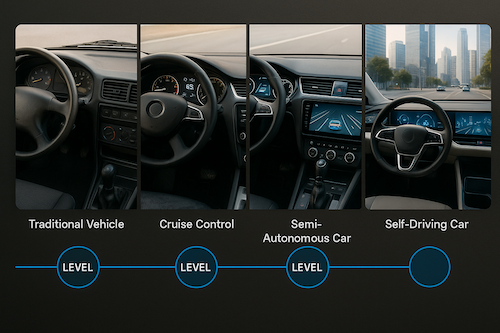
Autonomous vehicle technology has been in development for decades. The journey began with basic cruise control and has now evolved into sophisticated AI-driven systems capable of navigating urban environments.
Levels of Autonomy (SAE Standards)
The Society of Automotive Engineers (SAE) defines six levels of vehicle automation:
- Level 0 (No Automation): The driver controls everything.
- Level 1 (Driver Assistance): Features like adaptive cruise control assist the driver but do not take full control.
- Level 2 (Partial Automation): Vehicles can control steering and acceleration but require driver oversight (e.g., Tesla Autopilot).
- Level 3 (Conditional Automation): Vehicles can handle most driving tasks but require the driver to take over when necessary.
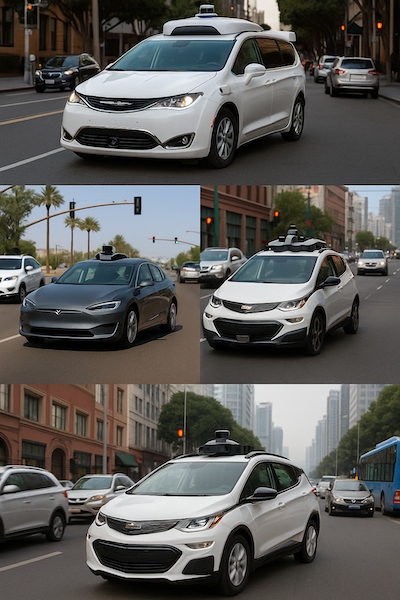
- Level 4 (High Automation): Cars can operate autonomously in predefined conditions (e.g., Waymo’s autonomous taxis in specific cities).
- Level 5 (Full Automation): No human intervention needed; the car can drive anywhere.
Currently, most self-driving systems operate at Level 2 or Level 3, with Level 4 technology being tested in limited environments. Level 5 remains a distant goal.
Key Technologies Powering Autonomous Vehicles
1. Artificial Intelligence & Machine Learning
AI enables self-driving cars to process vast amounts of data, recognize patterns, and make real-time driving decisions. Deep learning models help the car understand and respond to different driving scenarios.
2. Sensor Technology
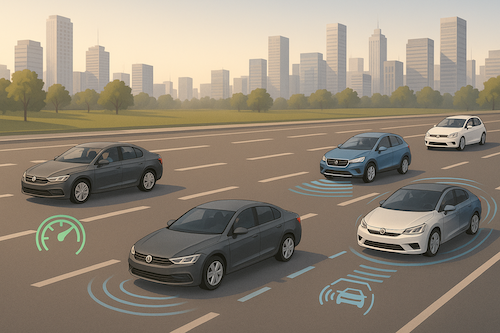
Autonomous vehicles rely on various sensors to perceive their surroundings:
- LIDAR (Light Detection and Ranging): Uses laser pulses to create a 3D map of the environment.
- Radar: Detects objects in different weather conditions.
- Cameras: Identify traffic lights, pedestrians, and road signs.
- Ultrasonic Sensors: Assist with close-range detection (e.g., parking).
3. Connectivity & V2X Communication
Vehicle-to-Everything (V2X) communication enables self-driving cars to exchange data with:
- Other vehicles (V2V) to avoid collisions.
- Infrastructure (V2I) like traffic signals for optimized routing.
- Pedestrians (V2P) to enhance safety.
4. High-Definition (HD) Mapping
HD maps provide highly accurate road information beyond what sensors detect, helping AVs navigate more safely.
5. Cloud Computing & Edge AI
Autonomous vehicles process enormous data streams. Cloud computing and edge AI enable quick data transmission and real-time decision-making.
Current State of Self-Driving Cars in 2026
Several companies have achieved significant milestones in autonomous driving technology.
Waymo has expanded its commercial robotaxi services across multiple U.S. cities and continues to be considered one of the most advanced Level 4 autonomous driving platforms.
Mercedes-Benz remains one of the few manufacturers with regulatory approval for Level 3 autonomous driving systems in selected markets.
Tesla continues developing its Full Self-Driving (FSD) platform using AI-powered vision systems, though most consumer vehicles still require driver supervision.
Chinese companies such as Baidu Apollo and Pony.ai have expanded autonomous taxi operations in several major cities, accelerating competition in the global AV market.
Meanwhile, logistics companies are increasingly testing autonomous delivery vehicles and self-driving trucks for commercial transportation.
Challenges & Barriers to a Driverless Future
1. Safety Concerns & Public Trust
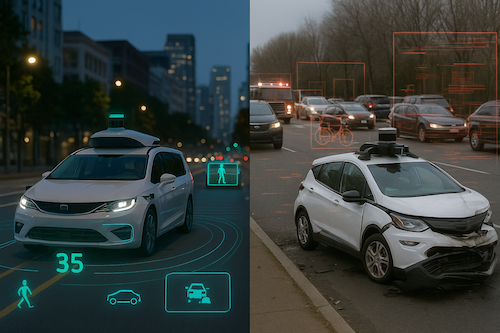
- High-profile accidents involving Tesla and Uber’s self-driving cars have raised concerns about reliability.
- Public skepticism remains a significant barrier to adoption.
2. Infrastructure Readiness
- Many roads lack necessary smart infrastructure for seamless AV operation.
- AVs struggle in unpredictable environments like construction zones and extreme weather.
3. Ethical Dilemmas
- How should an AV react in a situation where a crash is unavoidable?
- Should AVs prioritize passenger safety over pedestrians?
4. Cybersecurity Risks
- AVs are vulnerable to hacking and data breaches.
- Strong cybersecurity measures are required to prevent malicious attacks.
5. High Costs
- LIDAR and AI systems are expensive, making AVs cost-prohibitive for the average consumer.
The Future of Self-Driving Cars
The Future of Self-Driving Cars
Expected Timeline
2026–2028:
Expansion of Level 4 robotaxi services in major urban areas.2028–2032:
Increased adoption of autonomous trucks, delivery vehicles, and public transportation systems.Beyond 2032:
Gradual introduction of more advanced consumer autonomous vehicles, although fully unrestricted Level 5 autonomy may still take longer than originally predicted.
The Future Role of AI
Generative AI, multimodal AI models, edge computing, and next-generation sensors are expected to dramatically improve vehicle decision-making. Future autonomous vehicles will be better at understanding complex traffic situations, predicting human behavior, and operating safely in challenging environments.
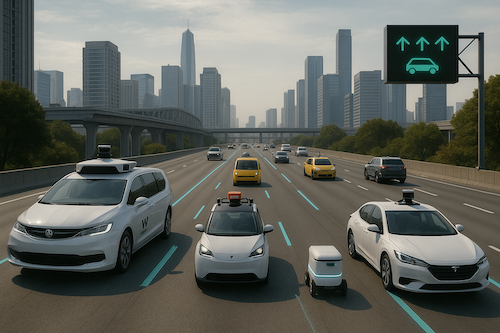
The future of self-driving cars depends heavily on advances in artificial intelligence, machine learning, and high-performance processors. To learn more about the technologies powering next-generation devices, check out our guide on the Best Chipsets of 2026: Snapdragon, MediaTek, Apple & More.
Companies such as Waymo continue to lead the development of fully autonomous driving systems and commercial robotaxi services.
Conclusion: Are We Ready for a Driverless Future?
Self-driving cars have made remarkable progress in recent years, and 2026 represents a significant milestone in the evolution of autonomous transportation. Companies such as Tesla, Waymo, Mercedes-Benz, Baidu, and Zoox continue to push the boundaries of AI-powered driving, bringing us closer to a future where vehicles can operate with minimal human intervention.
While fully autonomous Level 5 vehicles are not yet ready for widespread adoption, Level 3 and Level 4 systems are already being deployed in selected cities and controlled environments. Challenges related to safety, regulations, infrastructure, cybersecurity, and public trust still need to be addressed before self-driving cars become a common sight on roads worldwide.
The future of autonomous vehicles is also closely linked to advances in artificial intelligence and computing power. You can also explore our guide on the Best Chipsets of 2026: Snapdragon, MediaTek, Apple & More to understand the technologies driving next-generation innovation.
As autonomous technology continues to evolve, the question is no longer whether self-driving cars will become mainstream, but when. The coming decade is expected to redefine mobility, making transportation safer, smarter, and more efficient than ever before.
What do you think about the future of self-driving cars? Let us know your thoughts in the comments below!




Leave a Reply
Want to join the discussion?Feel free to contribute!