
The Impact of the Dot-Com Bubble

A Boom Fueled by Hype
The late 1990s witnessed an unprecedented surge in internet-based companies, sparking what would later be known as the dot-com bubble. The internet was a revolutionary concept, promising limitless opportunities for businesses and individuals alike. Investors, both seasoned and new, were eager to capitalize on the digital boom, pouring billions into startups that often had little more than an idea and a website. The stock market responded with soaring valuations, fueling further speculation.
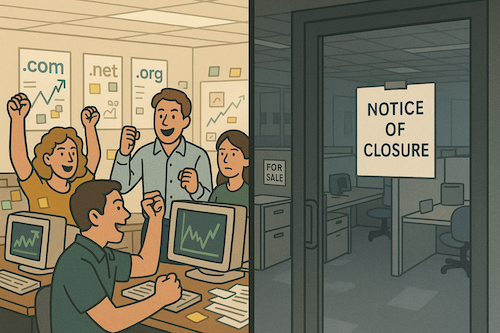
Startups, many of which lacked a clear path to profitability, saw their market values skyrocket simply because they had a “.com” attached to their name. Traditional business models were discarded in favor of aggressive expansion, with many companies prioritizing user acquisition over sustainable revenue streams. As a result, the Nasdaq Composite Index, heavily weighted with technology stocks, soared to record highs, reinforcing the belief that the internet was an unstoppable economic force.
The Dot-Com Bubble remains one of the most important events in modern technology and stock market history because it showed how hype, speculation, and weak business models can create massive financial risk. During the Dot-Com Bubble, many internet companies received huge investments without strong revenue plans, which eventually led to a major market crash.
To understand the market impact in more detail, you can read the Federal Reserve’s research on the Dot-Com Bubble. You can also explore more technology and business explainers in our Tech Tips section. The Dot-Com Bubble is still a powerful reminder that real innovation must be supported by sustainable growth, practical business strategy, and long-term value.

The Breaking Point
However, by the early 2000s, cracks in the foundation began to appear. Many of these startups were operating without clear business models, generating little to no revenue while burning through massive amounts of investor capital. The market, once driven by unbridled optimism, became increasingly skeptical. When companies failed to deliver on their lofty promises, confidence began to wane. As sell-offs began, stock prices plummeted, triggering a cascade of failures.
Major dot-com companies such as Pets.com and Webvan collapsed, their once-soaring valuations reduced to zero. The downturn wiped out nearly $5 trillion in market value from March 2000 to October 2002. The implosion left countless investors financially devastated, and thousands of employees suddenly found themselves jobless. The phrase “irrational exuberance,” famously coined by then-Federal Reserve Chairman Alan Greenspan, became synonymous with the speculative excesses of the dot-com era.

The Aftermath and Lessons Learned
In the wake of the crash, the tech industry underwent a necessary recalibration. Surviving companies were forced to pivot, prioritizing financial sustainability over mere growth. Out of the ashes emerged resilient firms like Amazon, Google, and eBay—companies that managed to navigate the turmoil by focusing on strong business fundamentals and adapting to changing market conditions. The dot-com crash also served as a learning experience for future entrepreneurs and investors.
Venture capitalists and financial institutions became more discerning, demanding viable business models and clear revenue streams before committing to funding. The collapse also accelerated the development of regulations and policies aimed at preventing similar speculative bubbles in the future. While painful, the crash ultimately paved the way for a more mature and disciplined tech sector, setting the stage for the next wave of innovation in cloud computing, social media, and e-commerce.

Pros and Cons of the Dot-Com Era
Pros:
- Accelerated the adoption of the internet, making it a crucial part of everyday life and business.
- Laid the groundwork for modern digital infrastructure, enabling future technological advancements.
- Provided a launchpad for innovative companies that would later become industry giants.
- Sparked global interest and investment in internet-based services and applications.
Cons:
- Resulted in massive financial losses, wiping out investments and retirement savings for many individuals.
- Led to widespread job losses as failing startups shut down operations.
- Undermined trust in tech investments, making it more difficult for legitimate companies to raise funds.
- Encouraged short-term speculation over long-term value creation, contributing to market instability.
A New Era of Tech Investment
Fast forward to today, and the landscape of tech investment has evolved significantly. Investors are now more cautious, demanding solid business models and clear profitability from startups. However, speculative bubbles continue to emerge—cryptocurrency, artificial intelligence, and Web3 markets have all displayed patterns reminiscent of the dot-com frenzy.
The key takeaway from the dot-com crash remains relevant: hype alone is never enough. Long-term success in the tech industry requires a foundation built on innovation, sound business strategies, and financial sustainability. While the dot-com bubble was a cautionary tale of market excess, it also underscored the transformative power of technology, proving that even amidst financial turmoil, true innovation finds a way to thrive.
FAQs
1. What was the Dot-Com Bubble?
The Dot-Com Bubble was a period in the late 1990s and early 2000s when internet-based companies received extremely high valuations, often without strong revenue or profit models. Many investors believed every online business would grow rapidly, which created a major stock market bubble.
2. Why did the Dot-Com Bubble happen?
The Dot-Com Bubble happened because of excessive hype around the internet, easy investor funding, rising stock prices, and unrealistic expectations from technology startups. Many companies focused on growth and website traffic instead of building sustainable business models.
3. When did the Dot-Com Bubble burst?
The Dot-Com Bubble started bursting in 2000, and the market decline continued into 2002. During this period, many internet startups collapsed, stock prices fell sharply, and investors lost billions of dollars.
4. What companies failed during the Dot-Com Bubble?
Some well-known companies that failed during the Dot-Com Bubble include Pets.com, Webvan, eToys, and Boo.com. These companies became examples of how fast-growing internet startups could collapse without strong revenue and profitability.
5. What lessons did investors learn from the Dot-Com Bubble?
The biggest lesson from the Dot-Com Bubble is that hype alone is not enough for long-term success. Investors learned to look for strong business models, real revenue, profitability, customer demand, and sustainable growth before investing in tech companies.
6. Did any companies survive the Dot-Com Bubble?
Yes, some companies survived the Dot-Com Bubble and became major technology leaders. Amazon, eBay, and Google are examples of companies that continued growing because they adapted, improved their business models, and focused on long-term value.
7. Why is the Dot-Com Bubble still important today?
The Dot-Com Bubble is still important because it shows how speculative investment can create financial risk in emerging industries. It is often compared to modern trends like cryptocurrency, artificial intelligence, and Web3, where hype can sometimes grow faster than real business value.



Leave a Reply
Want to join the discussion?Feel free to contribute!