
The Invention of the Computer: A Technological Revolution
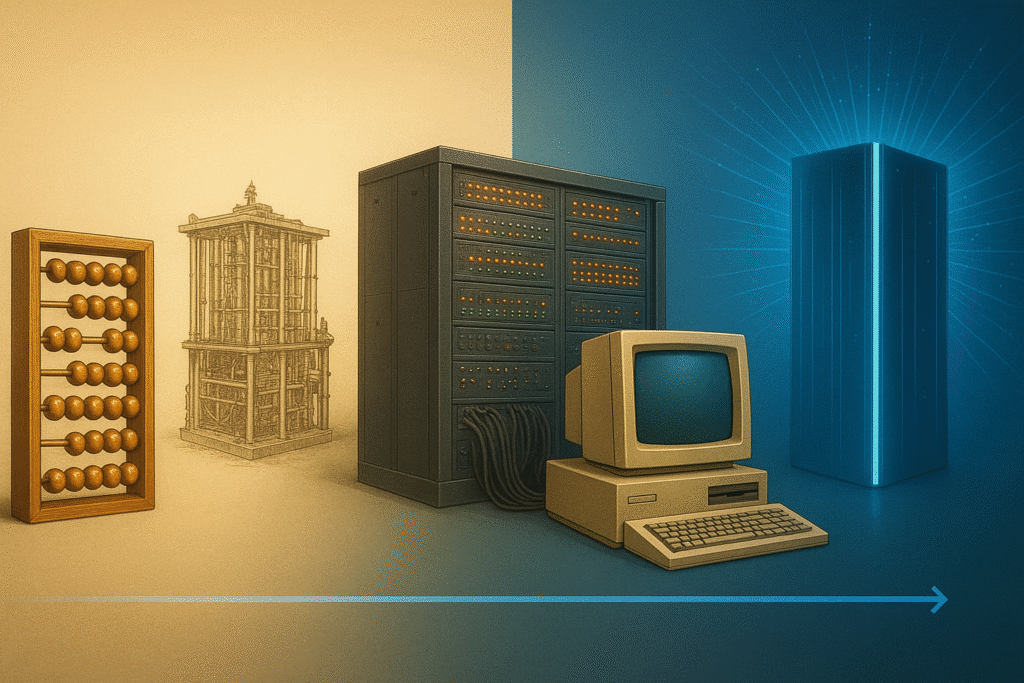
Invention of the Computer is a story of brilliant minds, groundbreaking inventions, and relentless innovation. Computers have become the backbone of modern life, powering everything from communication to space exploration. But where did it all begin? From ancient counting tools to today’s AI-powered machines, the journey of computing is nothing short of fascinating.
The Invention of the Computer is one of the most powerful milestones in modern technology, changing how people calculate, communicate, work, learn, store information, and solve complex problems. From the abacus and Charles Babbage’s Analytical Engine to ENIAC, transistors, microchips, personal computers, the internet, and artificial intelligence, the Invention of the Computer shaped the digital world we live in today.
The Invention of the Computer also made business operations faster, scientific research more accurate, and digital communication more accessible across the world. As technology advanced, the Invention of the Computer led to smaller, faster, and more affordable machines for homes, schools, offices, and industries. Today, the Invention of the Computer continues to influence artificial intelligence, cloud computing, robotics, automation, gaming, healthcare, education, and space exploration.
For a helpful external reference, readers can explore the Computer History Museum’s computer timeline here: https://www.computerhistory.org/timeline/computers/. You can also read our related internal article on The Rise of Personal Computers here: https://www.informationunboxed.com/the-rise-of-personal-computers/ to understand how the Invention of the Computer eventually led to computers becoming part of everyday life.
The Early Days
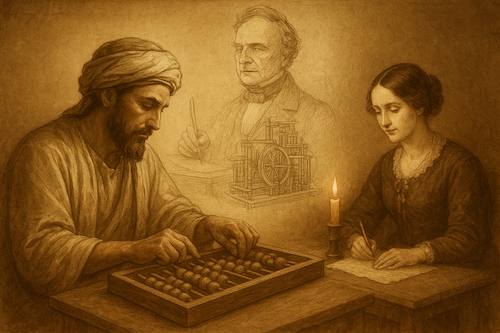
The idea of computing isn’t new. The earliest known computing device, the Abacus, was used by ancient civilizations thousands of years ago for basic arithmetic. However, the real shift towards automated computing came in the 19th century with Charles Babbage. Often called the “Father of the Computer,” Babbage designed the Analytical Engine, a mechanical device that could perform calculations. Though never built in his lifetime, it laid the foundation for future computers.
Adding to this vision was Ada Lovelace, the first person to recognize that machines could be programmed. She wrote what is now considered the first computer algorithm, making her the world’s first computer programmer.
The Rise of Electronic Computers
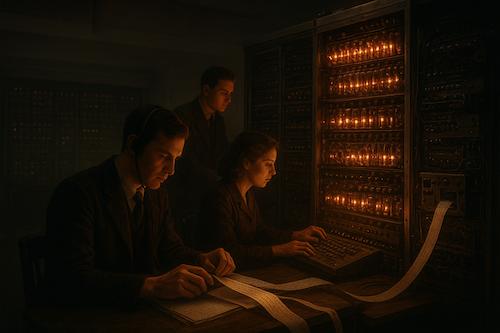
The real breakthrough came during World War II, when the demand for high-speed calculations led to the creation of the first electronic computers. In 1943, the British developed Colossus, a machine that helped break German codes, giving the Allies a significant advantage. Meanwhile, in the U.S., ENIAC (Electronic Numerical Integrator and Computer) was developed in 1945, becoming the first general-purpose electronic computer.
These machines were massive—filling entire rooms and requiring enormous power—but they proved that electronic computing was the future.
The Birth of Modern Computing
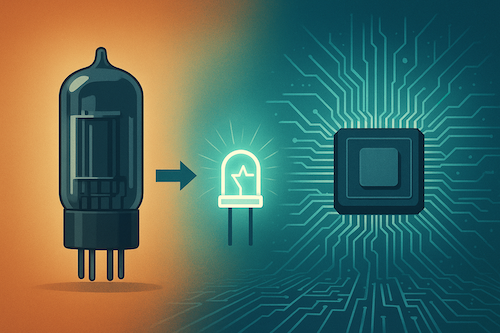
The real revolution began in 1947 with the invention of the transistor, replacing bulky vacuum tubes and making computers smaller, faster, and more reliable. Then came the integrated circuit (microchip) in the 1960s, which packed multiple transistors onto a single chip, paving the way for personal computers.
By the 1970s and 80s, companies like IBM, Apple, and Microsoft brought computers into homes and offices, making them more accessible than ever. Steve Jobs and Bill Gates became household names, shaping the future of personal computing.
The Internet Revolution
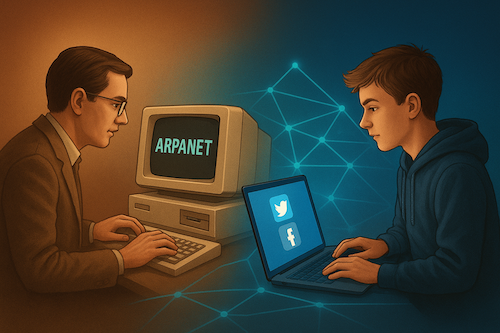
Computers took another giant leap with the invention of the internet in the late 20th century. What started as a military project (ARPANET) in the 1960s soon evolved into the World Wide Web, revolutionizing communication, business, and entertainment. By the 2000s, computers were no longer just for work—they became essential for social media, online shopping, and global connectivity.
Computers Today
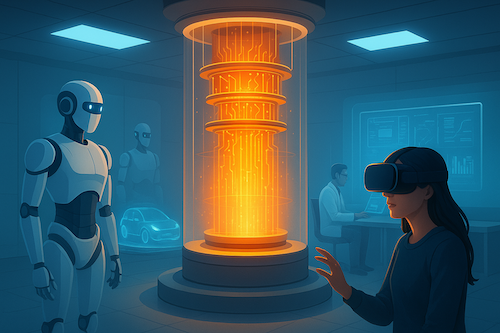
Today, computers are smarter, faster, and more powerful than ever. Artificial Intelligence (AI) is enabling machines to think, learn, and make decisions, while quantum computing promises to solve problems that even the most advanced supercomputers struggle with.
From self-driving cars to virtual reality and space exploration, computers continue to push the boundaries of what’s possible. What started as a simple idea—to automate calculations—has transformed into one of the most powerful forces driving human progress.
Conclusion




Leave a Reply
Want to join the discussion?Feel free to contribute!