
Arm vs x86: Which Powerful Architecture Will Win?
Arm vs x86 is one of the most important technology debates shaping the future of computing. For decades, x86 architecture, led by Intel and AMD, has dominated desktops, laptops, servers, and gaming PCs. Meanwhile, Arm architecture has become the backbone of smartphones, tablets, embedded systems, and increasingly, modern laptops and data centers.
Today, the competition between Arm and x86 is more intense than ever. Advancements in power efficiency, artificial intelligence, cloud computing, and custom chip design are allowing Arm-based processors to challenge traditional x86 dominance. At the same time, Intel and AMD continue to innovate with more efficient and powerful x86 processors.
The Arm vs x86 debate is becoming increasingly important as modern computing shifts toward efficiency and AI-driven workloads.
In this article, we will explore the key differences between Arm and x86, compare their strengths and weaknesses, examine their role in modern computing, and discuss which architecture is best positioned to shape the future of technology.
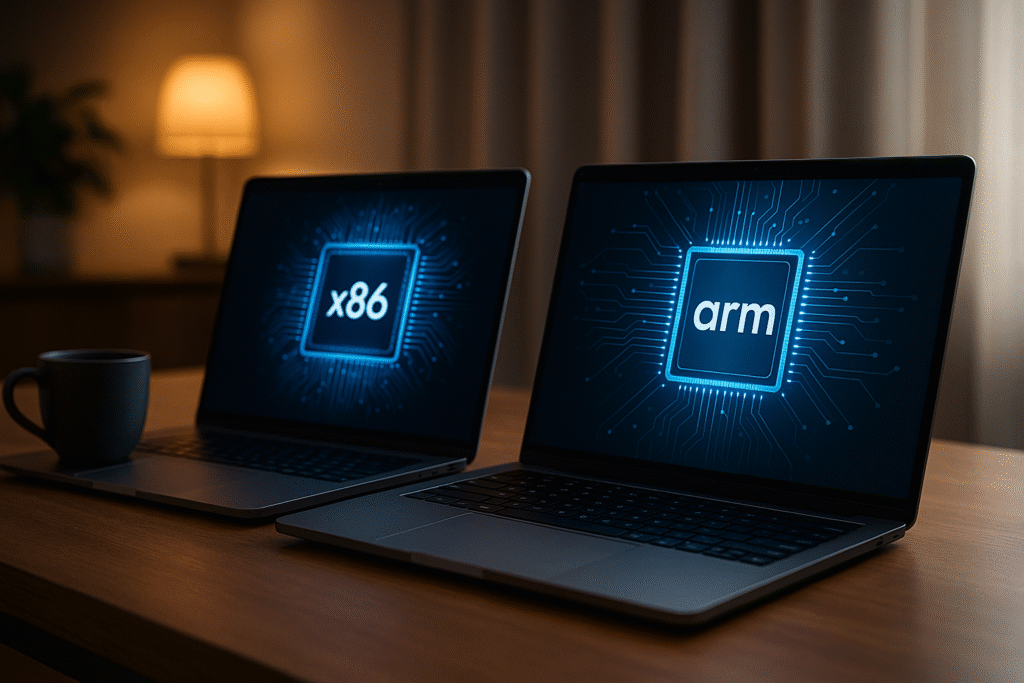
Understanding the Basics: Arm vs x86
What is x86?
- Developed by: Intel & AMD
- Characteristics:
- Complex Instruction Set Computing (CISC) – Executes more complex instructions per cycle.
- Higher power consumption but better raw performance.
- Backward compatibility with legacy software.
- Common Uses: Desktops, laptops, gaming PCs, workstations, servers, and data centers.
What is Arm?
- Developed by: Arm Holdings
To learn more about Arm’s processor architecture and ecosystem, visit the official Arm website: https://www.arm.com/
- Characteristics:
- Reduced Instruction Set Computing (RISC) – Simpler, more efficient instructions for better power efficiency.
- Lower power consumption – Ideal for mobile devices and battery-powered systems.
- Increased focus on customization and scalability.
- Common Uses: Smartphones, tablets, IoT devices, embedded systems, and increasingly, laptops and servers.
To better understand the Arm vs x86 competition, it’s important to compare their strengths and weaknesses.
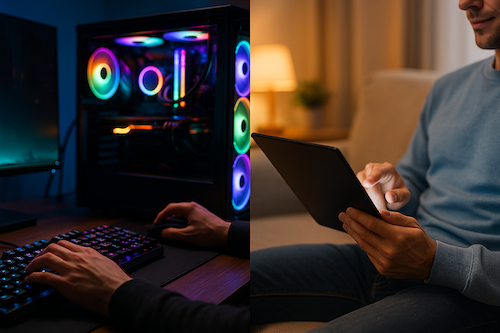
Key Differences Between Arm and x86
1. Performance vs Power Efficiency
- x86 excels in performance but consumes more power due to its complex instruction sets.
- Arm focuses on power efficiency, making it ideal for mobile devices and battery-dependent systems.
- With recent developments like Apple’s M-series chips and Qualcomm’s Snapdragon processors, Arm is closing the performance gap with x86 in PCs and laptops.
2. Software Compatibility
- x86 has a larger ecosystem of applications, as Windows and most PC software have historically been designed for it.
- Arm-based PCs and laptops face challenges with software optimization and compatibility, though efforts from Microsoft (Windows on Arm) and Apple (Rosetta 2) are bridging the gap.
3. Customizability and Scalability
- Arm offers high customization, allowing companies like Apple, Qualcomm, and Samsung to design their own optimized chips.
- x86, dominated by Intel and AMD, is less flexible since companies rely on these chipmakers for innovation.
- Scalability in Arm is making it attractive for cloud computing and AI workloads.
4. Cloud and Data Center Adoption
- x86 has been the traditional choice for servers and cloud computing, thanks to Intel Xeon and AMD EPYC processors.
- Companies like Amazon (AWS Graviton), Google, and Microsoft are investing in Arm-based server chips for better efficiency and cost savings.
- Arm’s presence in data centers is growing, challenging x86’s dominance.
5. Gaming and High-Performance Computing
- Gaming PCs and consoles are largely x86-based due to better support for high-performance GPUs and software.
- Arm’s role in gaming is increasing, with advancements in mobile gaming and cloud gaming.
- Apple’s M-series chips have shown that Arm can deliver impressive gaming performance on macOS.
The future of Arm vs x86 will largely depend on software support, performance, and power efficiency.
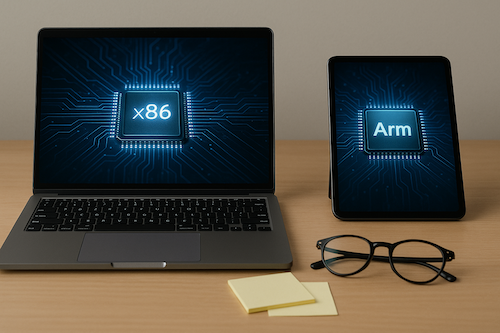
The Future of Arm and x86
1. The Rise of Arm in Laptops and PCs
- Apple’s transition from Intel to Apple Silicon (M1, M2, M3) shows that Arm can rival x86 in desktops and laptops.
If you’re interested in processor technologies, check out our guide on Best Chipsets of 2026
- Microsoft and Qualcomm are developing more powerful Arm-based Windows laptops.
- If software compatibility continues to improve, Arm-based PCs could challenge Intel and AMD’s dominance.
2. Arm in Data Centers and AI Workloads
- Cloud providers like AWS, Google, and Microsoft are investing in Arm-based server chips for better power efficiency.
- AI processing and edge computing benefit from Arm’s low power consumption and efficiency.
- Nvidia’s Arm-based Grace CPU aims to boost AI and HPC workloads.
3. x86’s Push for Efficiency and Innovation
- Intel and AMD are focusing on hybrid architectures (like Intel’s Performance and Efficiency cores in Alder Lake) to compete with Arm’s efficiency.
- x86 processors are evolving to reduce power consumption, making them more competitive in mobile and portable devices.
- AMD’s low-power Ryzen processors aim to challenge Arm in efficiency-focused applications.
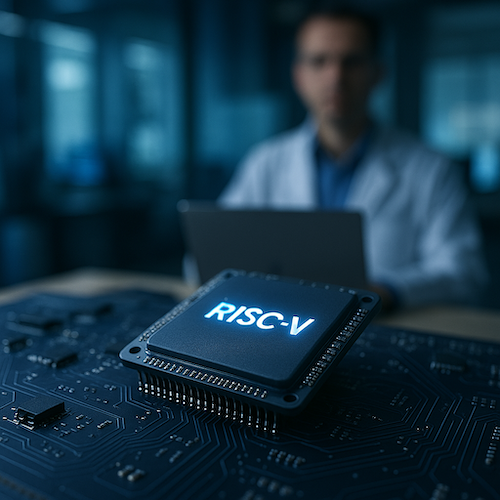
4. The Role of RISC-V: A New Challenger?
- While Arm and x86 dominate today, RISC-V is emerging as an open-source alternative.
- Companies like Google, Nvidia, and Western Digital are exploring RISC-V for future computing applications.
- If widely adopted, RISC-V could further disrupt the computing landscape.
Conclusion: Which Will Dominate the Future?
The Arm vs. x86 battle is no longer just about mobile vs desktop; it’s about the future of computing across all sectors. While x86 continues to lead in high-performance computing, gaming, and legacy applications, Arm is making aggressive strides in laptops, data centers, and AI workloads.
If software compatibility and performance improvements continue, Arm could become the dominant architecture in more computing sectors, especially as power efficiency becomes a top priority. However, x86 is not going away anytime soon, and Intel and AMD are actively working on solutions to stay relevant.
Ultimately, the future of computing may not be about Arm vs x86, but rather how these architectures evolve to meet the demands of modern technology. The computing landscape is shifting, and both architectures will play critical roles in shaping the next generation of devices, data centers, and AI-driven applications.

While the Arm vs x86 battle continues, both architectures are expected to shape the future of computing for years to come.
What’s your take on the future of computing? Will Arm overtake x86, or will both coexist in different markets? Share your thoughts below!



Leave a Reply
Want to join the discussion?Feel free to contribute!