
OLED vs QLED vs LED TVs
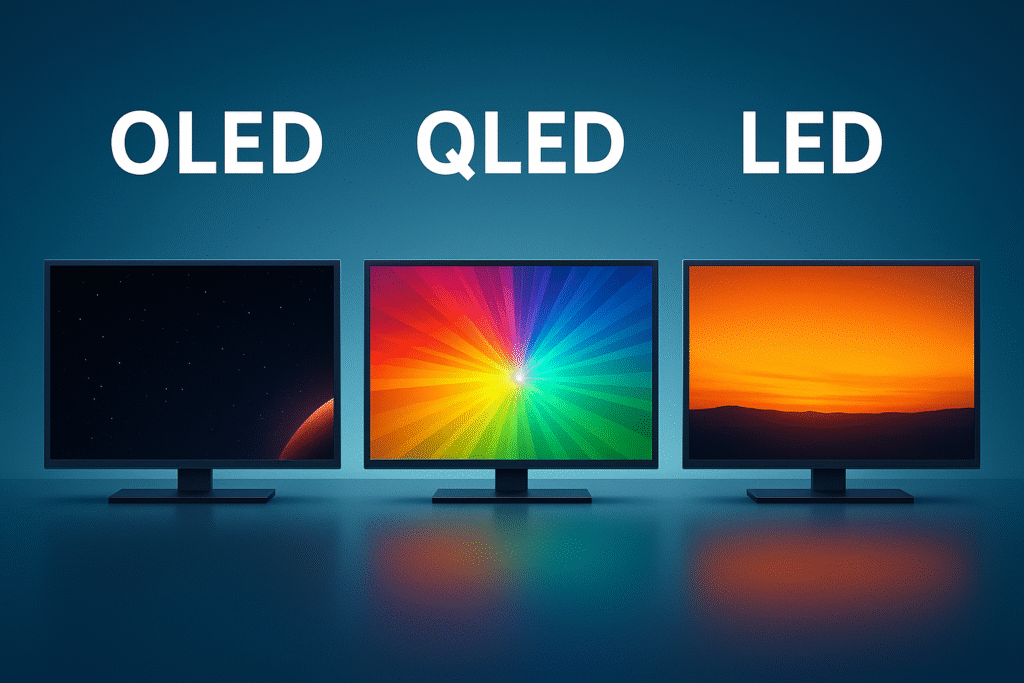
OLED vs QLED vs LED TVs – when it comes to buying a new television, the sheer number of options can be overwhelming. You may have heard these terms thrown around, but what do they really mean, and how do they differ from each other? All of these technologies promise superior picture quality, but the underlying technology behind each one varies. To help you make an informed decision, let’s take a closer look at each type of television and understand their strengths and weaknesses.
OLED vs QLED vs LED TVs is an important comparison for buyers who want the right balance of picture quality, brightness, contrast, price, and long-term value. While choosing between OLED vs QLED vs LED TVs, users should compare black levels, color accuracy, brightness, viewing angles, gaming performance, burn-in risk, energy usage, screen size, and budget. This guide on OLED vs QLED vs LED TVs helps readers understand how LED TVs use backlighting, how QLED TVs improve brightness and color with quantum dots, and how OLED TVs deliver deeper blacks with self-lit pixels.
The OLED vs QLED vs LED TVs comparison is also useful for deciding whether you need an affordable TV, a bright TV for daytime viewing, or a premium TV for movies and gaming. If you are confused between OLED vs QLED vs LED TVs, focus on room lighting, viewing habits, screen size, budget, and picture-quality expectations before buying. For most buyers, understanding OLED vs QLED vs LED TVs makes it easier to choose a television for everyday entertainment, sports, OTT streaming, console gaming, and family viewing.
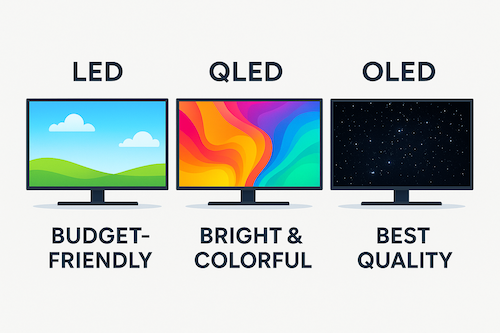
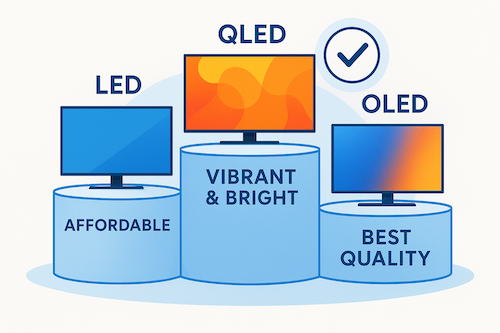
The OLED vs QLED vs LED TVs difference also matters because OLED is known for deep blacks, QLED is known for high brightness, and LED is known for affordability. A clear OLED vs QLED vs LED TVs comparison can help you avoid overspending on features you may not need. Before buying, always compare OLED vs QLED vs LED TVs based on your room brightness, content type, budget, warranty, and long-term usage.
For a helpful external reference, readers can check Samsung’s official explanation of TV display technologies here: https://www.samsung.com/in/tvs/tv-buying-guide/what-is-qled-tv/. You can also read our related internal guide on Best Gaming Monitors in India here: https://www.informationunboxed.com/top-10-best-gaming-monitors-in-india-2026/ to compare another display-focused product before buying.
LED TVs
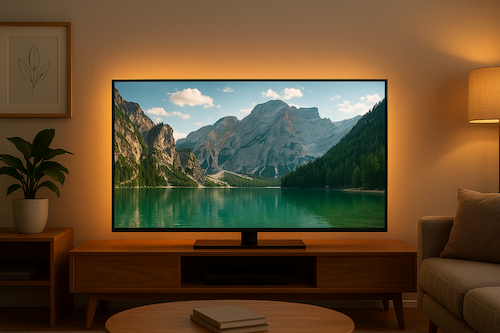
LED TVs are the most common type of television on the market. The term “LED” stands for Light Emitting Diode, which refers to the technology used to backlight the screen. In an LED TV, the display panel is made of liquid crystal display (LCD) technology, but it is backlit by LED lights. The LED backlighting can either be placed around the edge of the screen (edge-lit) or spread evenly across the entire back of the screen (full-array), with full-array being the superior option for better contrast and black levels.
Although LED TVs offer decent picture quality, their biggest limitation is that they cannot achieve true blacks. Since the light source is always on, dark areas of the image tend to look more gray than truly black. Despite this, LED TVs are still popular because they tend to be more affordable and can produce vibrant colors, making them a solid choice for most buyers.
QLED
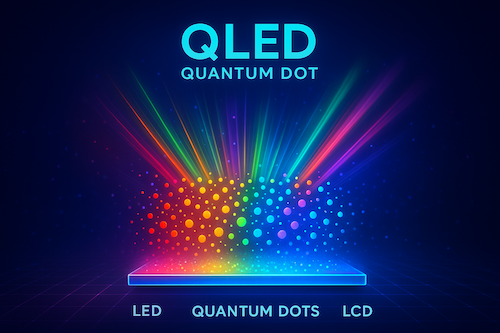
QLED, or Quantum Dot LED, is an advancement of LED technology, introduced by Samsung, that uses a layer of quantum dots to enhance the picture quality. Quantum dots are microscopic particles that emit light when exposed to a light source. In a QLED TV, this layer of quantum dots is placed between the LED backlight and the LCD panel. The quantum dots are capable of producing a wider range of colors and improving brightness levels, which results in more vivid images.
While QLEDs still rely on LED backlighting, they are a step up from traditional LED TVs in terms of brightness, color accuracy, and overall picture quality. The quantum dots help QLED TVs deliver exceptional color performance, making them a good choice for those who want bright, vivid images, especially in well-lit rooms. However, like LED TVs, QLEDs are still limited when it comes to true black levels because they rely on the LED backlight.
OLED
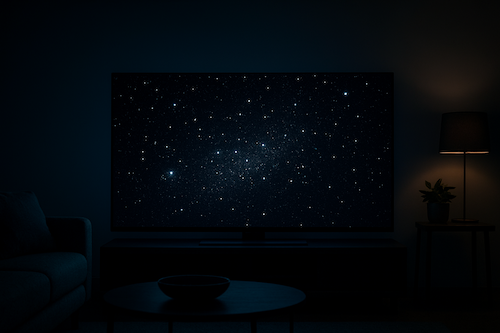
OLED, or Organic Light Emitting Diode, is a completely different technology from LED and QLED. Unlike both LED and QLED, OLED TVs do not require a backlight at all. Each individual pixel in an OLED panel is an organic material that emits its own light when an electric current passes through it. This means that each pixel can turn on or off independently, allowing OLED TVs to achieve perfect black levels. When a pixel is turned off, there is no light emitted, resulting in deep, inky blacks that provide an incredible contrast ratio.
OLED TVs are known for their superior picture quality, offering richer colors, higher contrast, and a more immersive viewing experience. Because of their ability to display true blacks, OLED TVs have an advantage in dark room settings where contrast is key. Additionally, OLED screens can be thinner and more flexible than LED or QLED displays, allowing for sleek, modern designs.
The downside of OLED technology is that it can be more expensive than both LED and QLED TVs. Also, while OLED panels are known for their superior picture quality, they are susceptible to a phenomenon called “burn-in,” where static images can leave permanent marks on the screen if they are displayed for extended periods.
Which One Should You Choose?
The right TV for you depends on your budget, viewing preferences, and the environment where the TV will be placed.
- LED TVs are the most budget-friendly option and still offer good performance for most casual viewing. They are a solid choice if you’re on a budget or if you watch TV in a bright room where deep blacks are less important.
- QLED TVs provide a significant boost in color and brightness, making them ideal for well-lit rooms. If you want a more vibrant viewing experience and don’t mind paying a little more, QLED could be the way to go.
- OLED TVs offer the best picture quality overall, thanks to their ability to achieve true blacks and superior contrast. If you’re a cinephile or gaming enthusiast who values picture quality above all else, and you don’t mind spending extra, an OLED TV is an excellent choice.
Conclusion




Leave a Reply
Want to join the discussion?Feel free to contribute!