
Regulating AI: Balancing Innovation & Responsibility
Regulating AI is becoming increasingly crucial as Artificial Intelligence (AI) advances at an unprecedented rate, transforming industries, improving efficiency, and enhancing decision-making. From autonomous vehicles and AI-driven healthcare to automated customer service and predictive analytics, AI is reshaping the way we live and work. However, with its rapid progress come serious ethical, security, and societal concerns.
To ensure AI’s safe and responsible development, governments and organizations worldwide are working on AI regulations. The challenge lies in striking a balance—encouraging innovation while preventing misuse, bias, and risks. In this article, we explore why regulating AI is necessary, the key challenges it presents, global efforts toward AI governance, and what the future holds for responsible AI development.
Regulating AI is important because artificial intelligence can create major benefits while also raising concerns around bias, privacy, misinformation, job displacement, cybersecurity, and accountability. As AI becomes more common in healthcare, finance, education, customer service, autonomous vehicles, and content creation, Regulating AI helps ensure that innovation remains safe, transparent, ethical, and responsible. The Regulating AI debate is also growing worldwide as governments introduce risk-based rules, safety frameworks, and governance standards for developers and companies.
For a trusted external reference, readers can explore the European Commission’s official page on the EU AI Act, which describes it as a risk-based legal framework for trustworthy AI: https://digital-strategy.ec.europa.eu/en/policies/regulatory-framework-ai. You can also read our related internal article on The Evolution of Artificial Intelligence here: https://www.informationunboxed.com/the-evolution-of-artificial-intelligence/ to understand why Regulating AI has become more important as AI systems become more advanced.
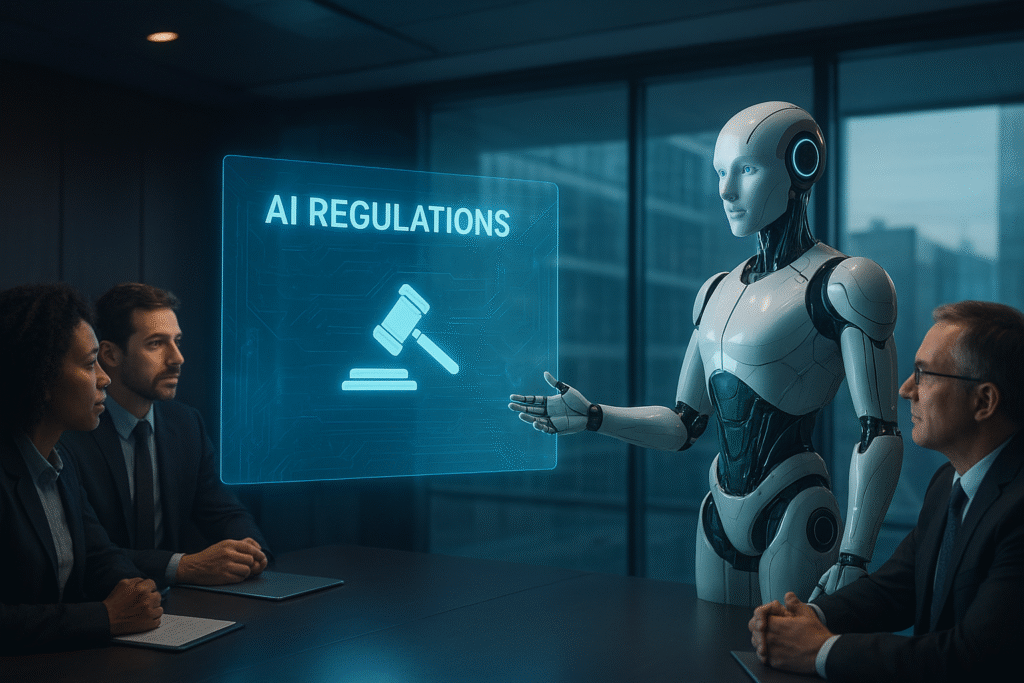
Why AI Regulation is Essential
1. Preventing AI Bias and Discrimination
AI systems learn from data, but if the data is biased, the AI will also be biased. Examples include:
- AI recruitment tools discriminating against certain genders or ethnicities.
- Facial recognition systems misidentifying minorities, leading to wrongful arrests.
- AI-driven financial lending favoring certain demographics over others.
Regulations ensure that AI systems are trained with diverse, unbiased datasets and undergo rigorous ethical testing.
2. Ensuring Transparency and Accountability
AI models, especially deep learning systems, often function as “black boxes”, meaning their decision-making process is unclear. This lack of transparency raises concerns in healthcare, finance, and legal sectors, where AI decisions can have life-altering consequences.
Regulations demand that AI developers explain how their algorithms work, provide audits, and ensure accountability for AI-driven decisions.
3. Addressing Job Displacement and Economic Disruptions
AI-driven automation is replacing traditional jobs, especially in manufacturing, customer service, and data processing. Without regulations, industries might prioritize AI adoption without workforce retraining programs, leading to mass unemployment.
AI regulations can enforce:
- Job transition programs
- AI taxation models (where companies using AI contribute to social funds)
- Skill development initiatives
4. Mitigating AI-Generated Misinformation
AI-powered tools like ChatGPT, deepfake generators, and automated content creators can produce realistic yet misleading or harmful content.
- Regulations can mandate:
- Labeling AI-generated content
- Preventing deepfake abuse
- Holding creators accountable for misinformation
5. Preventing AI in Autonomous Weapons & Cyber Threats
Unregulated AI development can lead to autonomous weapons, AI-driven cyberattacks, and unethical surveillance. If AI falls into the wrong hands, it can be used for:
- AI-powered hacking (breaking into security systems)
- Autonomous killer drones (capable of making attack decisions)
- Mass surveillance (threatening privacy rights)
Regulatory bodies must ensure that AI is developed responsibly, preventing its misuse in warfare and crime.
Challenges in Regulating AI
While regulating AI is necessary, it presents several challenges:
1. Keeping Up with Rapid AI Advancements
AI is evolving faster than laws can be created. Regulations risk becoming obsolete if they are too rigid. A flexible regulatory framework is needed to adapt to emerging AI technologies.
2. Balancing Innovation and Control
Overregulation can stifle innovation, preventing startups and researchers from experimenting with new AI models. Governments must encourage ethical AI development without unnecessary restrictions.
3. Global AI Governance Challenges
Different countries have varying perspectives on AI regulation. For example:
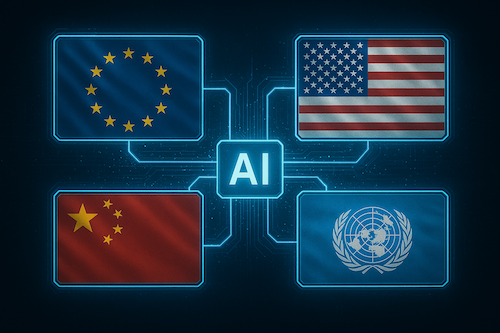
- The EU enforces strict AI laws focusing on privacy and ethics.
- The US favors self-regulation and innovation, with minimal restrictions.
- China heavily regulates AI but also uses it for mass surveillance.
Creating global AI standards remains a complex challenge.
4. AI’s Unpredictability
AI systems can self-learn and evolve, making it hard to predict how they will behave in the long run. Traditional laws designed for static systems might not be effective for dynamic AI models.

Global Efforts in AI Regulation
Governments and organizations worldwide are taking steps to regulate AI:
1. The European Union (EU) AI Act
The EU is leading AI regulation efforts with its AI Act, which classifies AI systems into risk categories:
- Unacceptable risk AI (e.g., social scoring systems) – Banned
- High-risk AI (e.g., AI in healthcare, law enforcement) – Strictly regulated
- Limited risk AI (e.g., chatbots, recommendation algorithms) – Transparency required
- Minimal risk AI (e.g., AI filters in apps) – No restrictions
2. The United States’ AI Bill of Rights
The US government has proposed an AI Bill of Rights that focuses on:
- Privacy protection
- Fairness and bias prevention
- Transparency in AI decisions
However, AI regulation in the US remains industry-driven, with companies setting their own guidelines.
3. China’s Strict AI Regulations
China has implemented tight AI regulations, especially for:
- Facial recognition and surveillance AI
- AI-generated content labeling
- Censorship of politically sensitive AI applications
4. The Role of the United Nations (UN)
The UN is working on global AI ethics guidelines and proposing international AI safety measures to prevent AI misuse in warfare and cybercrime.
The Future of AI Regulation
The future of AI regulation will likely involve:
AI Ethics Committees: Governments and companies will have independent bodies monitoring AI developments.
AI Audits & Certifications: AI systems may require compliance certificates before being deployed in sensitive industries.
Self-Regulating AI: AI models could have built-in ethical programming that automatically prevents misuse and bias.
International AI Laws: Countries may collaborate to establish global AI standards, preventing regulatory loopholes.
Conclusion
AI is a powerful tool that can revolutionize industries, but without regulations, it can also cause harm. Striking the right balance between innovation and responsibility is crucial. Governments, tech companies, and researchers must work together to create flexible, ethical, and effective AI regulations.
As AI continues to evolve, so must our approach to governing it. The future of AI regulation is not about stopping progress, but ensuring that progress benefits everyone—ethically, responsibly, and safely.
Frequently Asked Questions About Regulating AI
1. What does Regulating AI mean?
Regulating AI means creating rules, guidelines, and safety standards for how artificial intelligence is developed, used, and monitored. The goal is to make sure AI systems are safe, fair, transparent, and responsible while still allowing innovation to grow.
2. Why is Regulating AI important?
Regulating AI is important because AI can affect privacy, jobs, security, healthcare, finance, education, and public safety. Without proper rules, AI systems may create biased results, spread misinformation, misuse personal data, or make decisions without clear accountability.
3. What are the main challenges in Regulating AI?
The main challenges in Regulating AI include keeping up with fast technology changes, avoiding overregulation, reducing bias, protecting user privacy, ensuring transparency, and creating global rules that different countries and companies can follow.
4. How can AI regulation prevent bias?
AI regulation can help prevent bias by requiring companies to test AI systems, use diverse datasets, perform regular audits, and explain how important decisions are made. This is especially important in areas like hiring, lending, healthcare, law enforcement, and education.
5. Which countries are working on AI regulation?
Many countries and regions are working on AI regulation, including the European Union, United States, China, United Kingdom, India, and several international organizations. The EU AI Act is one of the most discussed examples because it classifies AI systems based on risk.
6. Can Regulating AI slow down innovation?
Regulating AI can slow innovation if rules are too strict, unclear, or difficult for startups to follow. However, balanced regulation can actually support innovation by creating trust, reducing risks, and giving companies clear guidelines for responsible AI development.
7. What is the future of Regulating AI?
The future of Regulating AI will likely include stronger transparency rules, AI audits, safety testing, content labeling, data protection, ethical review boards, and international cooperation. As AI becomes more powerful, regulation will focus on keeping technology useful, safe, and beneficial for society.




Leave a Reply
Want to join the discussion?Feel free to contribute!